Antonio Mejía
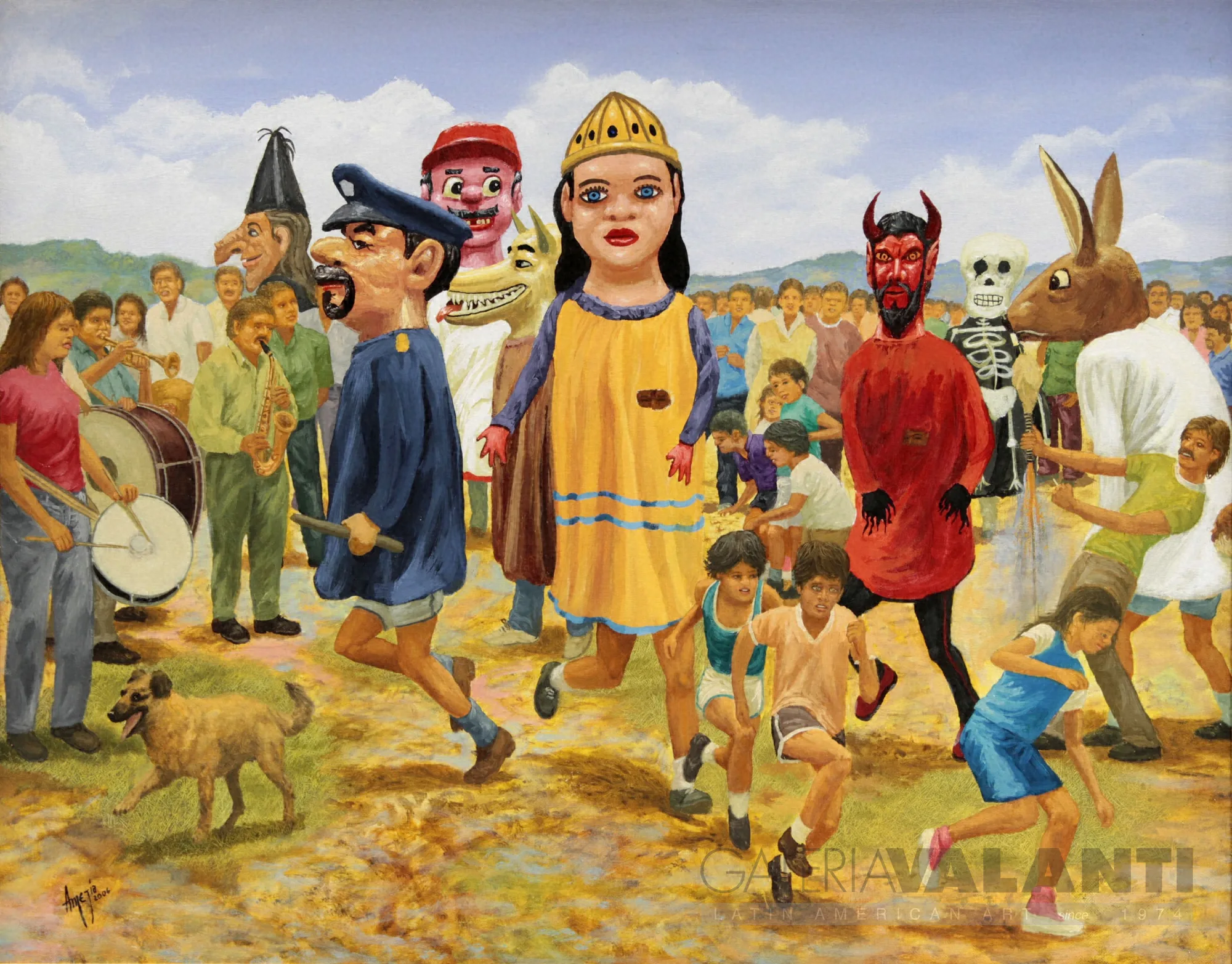
Mascarada
- Year
- 2000
- Technique
- Oil/Canvas
- Dimensions
- 57 × 75 cm
- Status
- Available
- Palette
- ochre yellow, vermilion red, navy blue, sky blue, olive green
- Brushwork
- Descriptive and modeled brushstroke, with soft impasto and clear definition of festive contours and volumes.
Curatorial analysis
Curatorial analysis
The overflow does not originate in the music, but in the fixity of the gazes. At the center of the scene, the Giganta advances with wide, unblinking eyes and an almost totemic stiffness, flanked by the vermilion silhouette of the Devil and the exaggerated profile of the policeman. Unlike these cardboard and wire masks, whose faces remain petrified in a perpetual grimace, the bodies that carry them and the children racing around them inject a kinetic energy that threatens to spill past the lower edge of the canvas.
The composition is governed by a diagonal thrust that surges from the background toward the foreground. On the left, the brass band anchors the acoustic pulse of the folk celebration, with the bass drum, snare, and brass gathering the musicians into a dense mass that provides visual weight to the flank. From there, the procession fans out. The visual tension relies on the confrontation of two distinct rhythms: the frontal, solemn march of the oversized effigies contrasted with the frantic scramble of the running children, accompanied by a stray dog that barks and dodges their strides across a sun-scorched, sandy ground.
Across the surface, color operates through bold, forthright contrasts. The vibrant yellow of the central dress, the fiery red of the devil's garb, and the deep blue of the police uniform act as chromatic anchors organizing the middle ground, standing out against the muted, attentive crowd that seals the horizon. The overhead daylight also exposes the mundane reality of the ritual: the small mesh window at chest level through which the performer breathes, the scraped knees, the dust kicked up in flight. The masquerade is not idealized here as a passive picturesque postcard; it is recorded as a visceral experience where play borders on fright and collective commotion disrupts the quietude of a provincial afternoon.
More works by Antonio Mejía
9 works
Available works
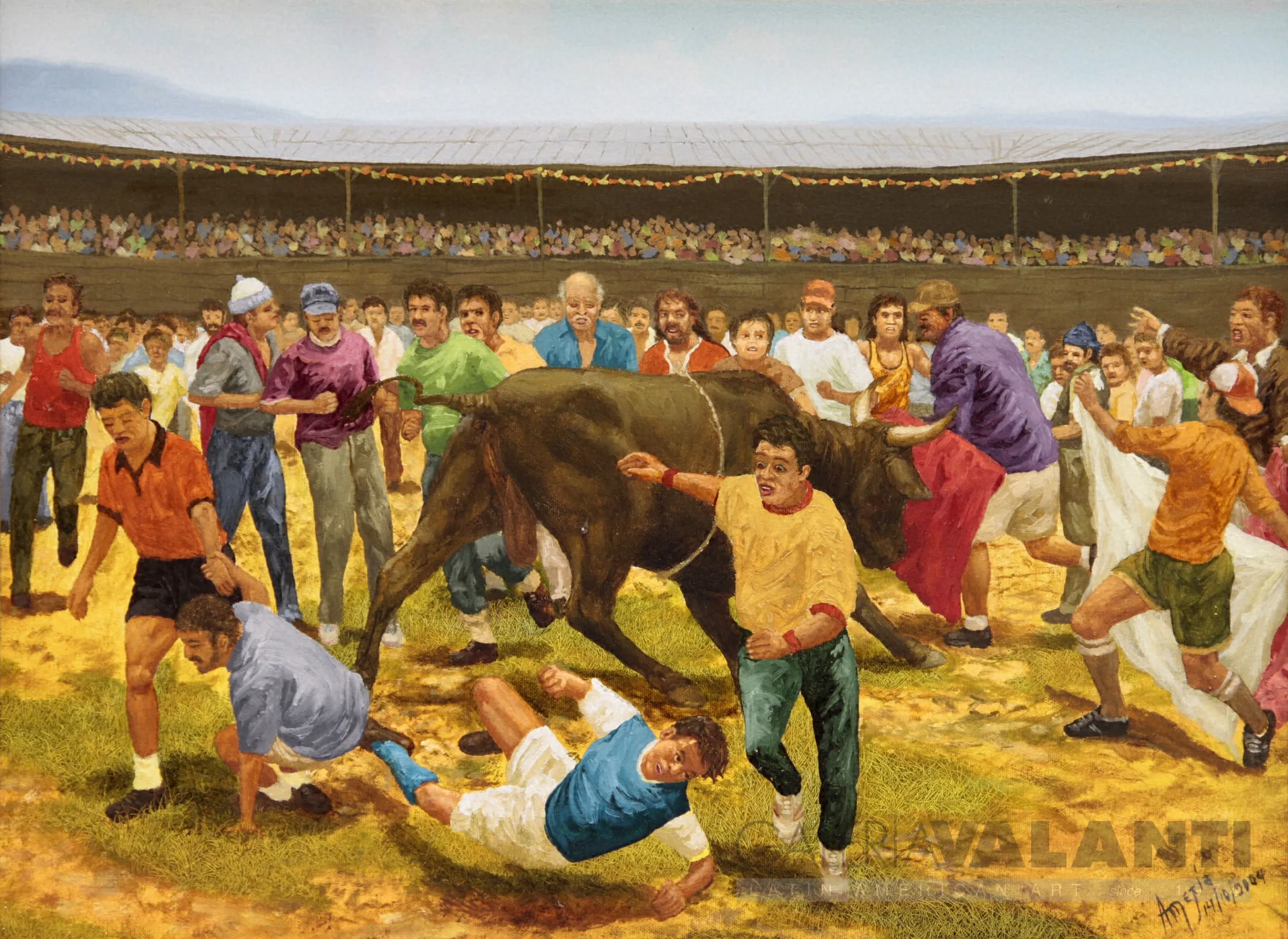
- Corrida de Toros a la TicaAntonio Mejía · 2000
- TopeAntonio Mejía · 2000
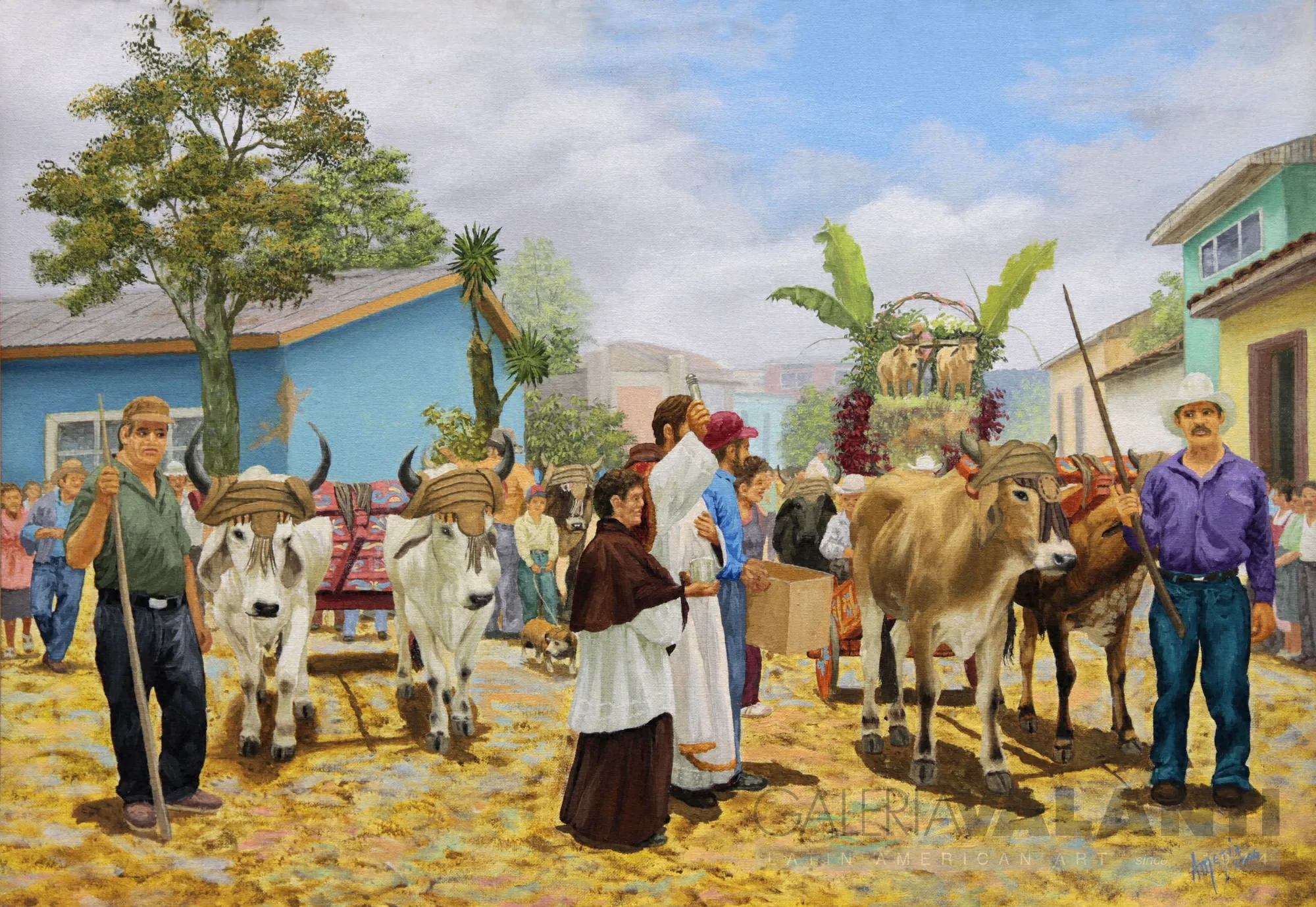
- Bendición de los Animales, San Antonio EscazúAntonio Mejía · 2005
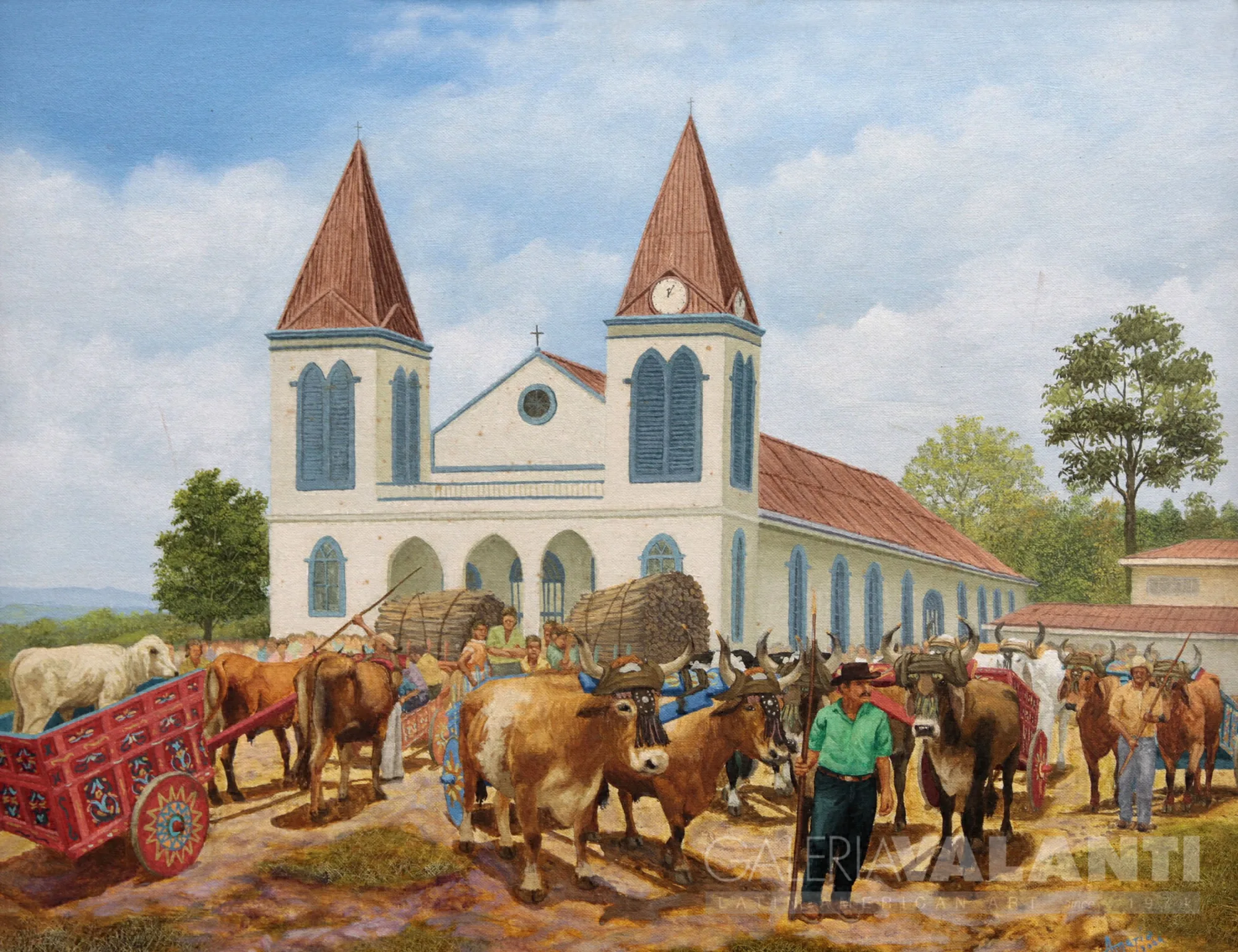
- Bendición de los AnimalesAntonio Mejía · 2005
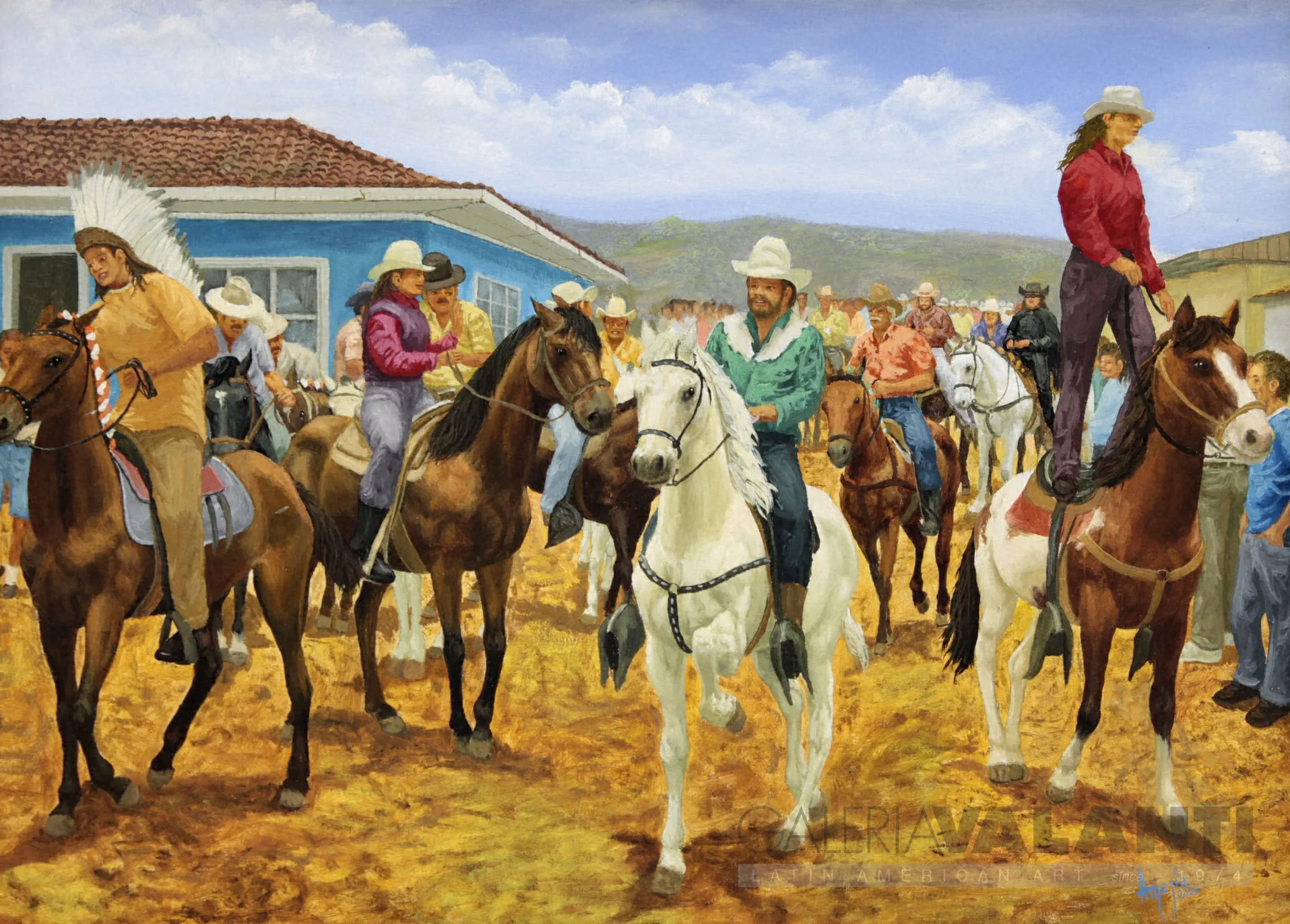
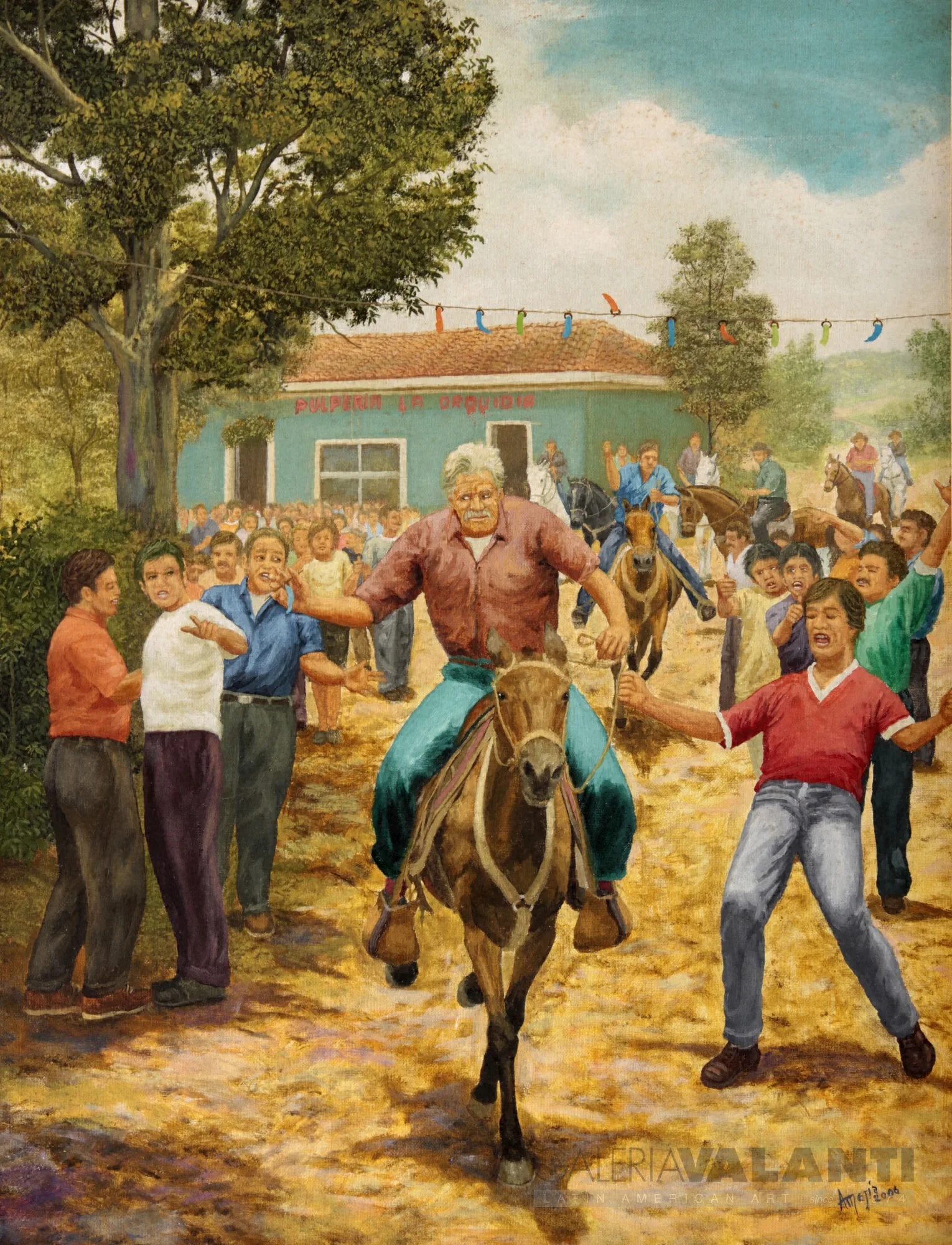
- Carrera de CintasAntonio Mejía · 2000
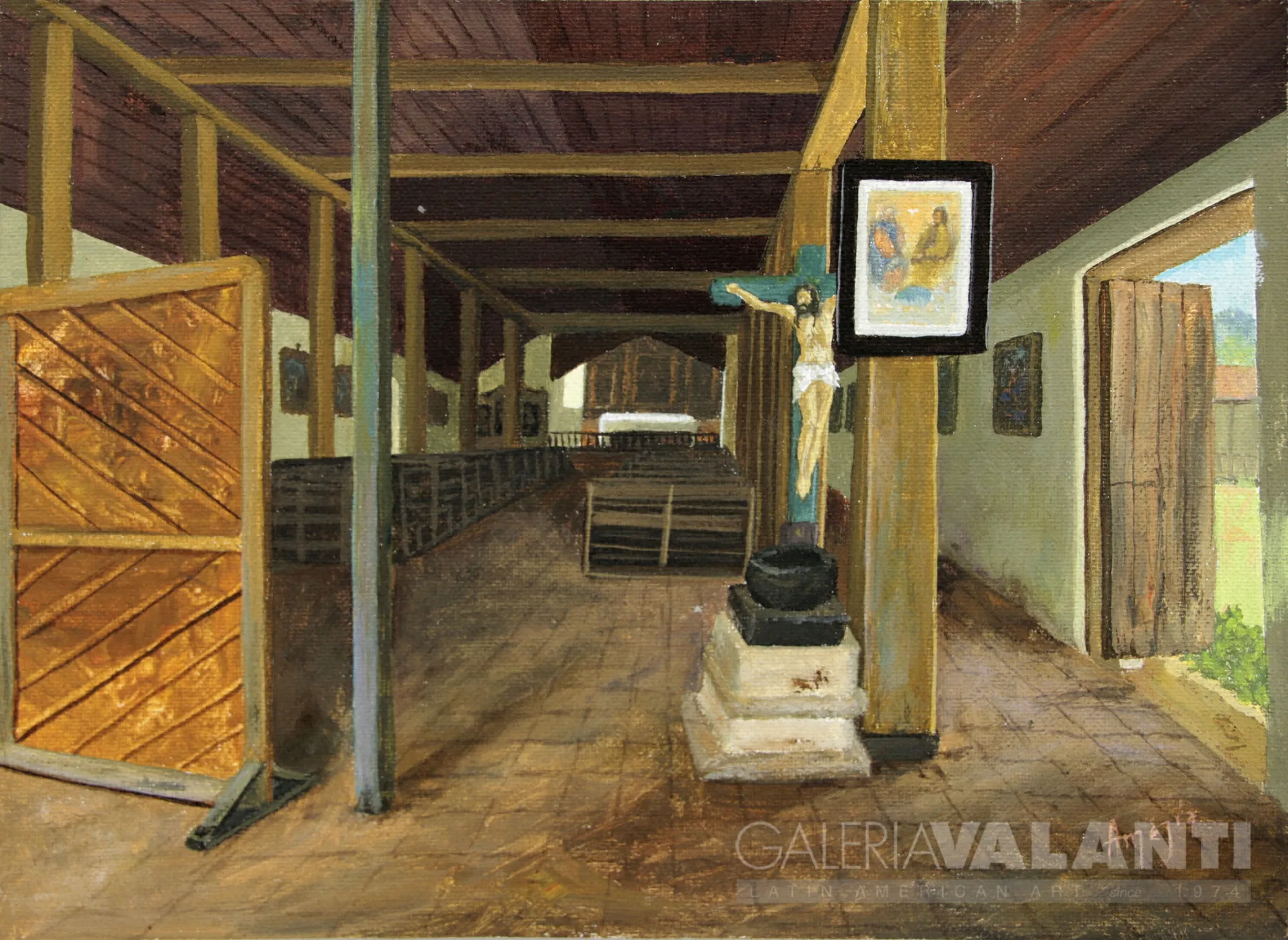
- Iglesia de Orosí por DentroAntonio Mejía
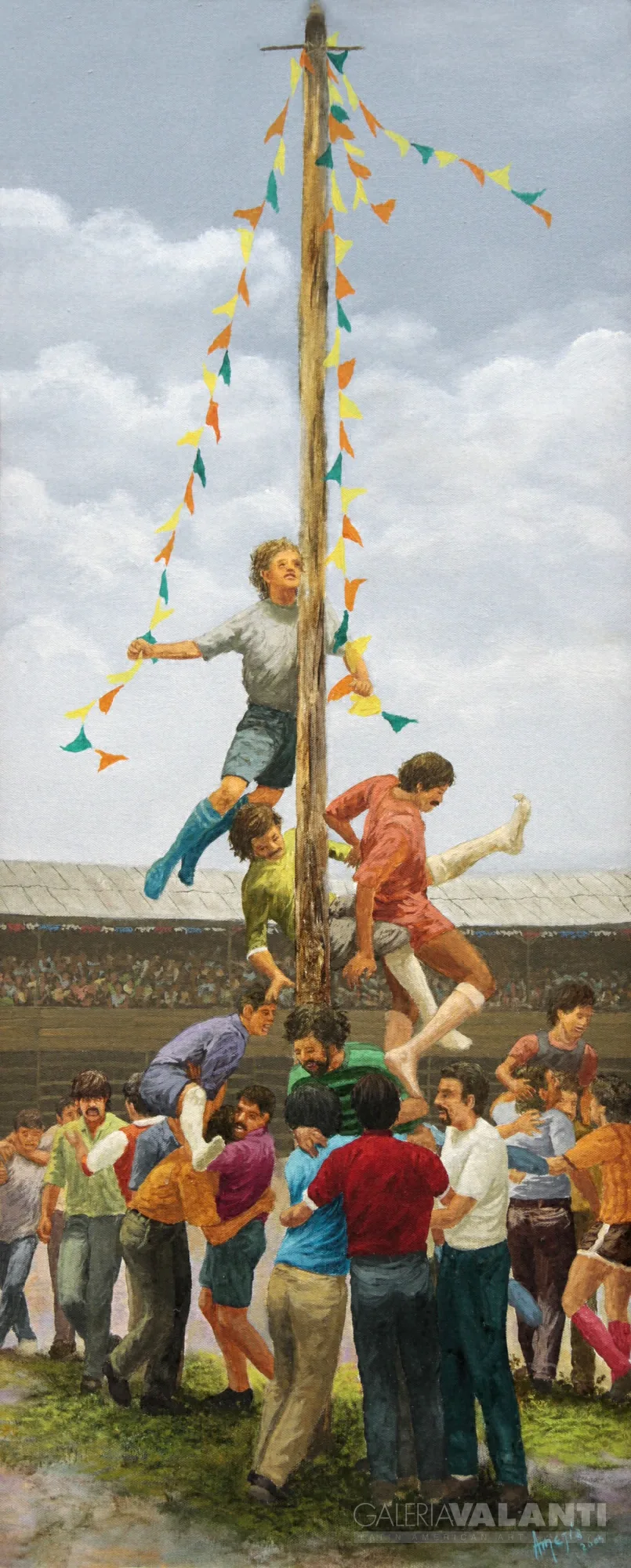
- Palo EncebadoAntonio Mejía · 2005
Sold and historical
Similar works
By subject, palette and style
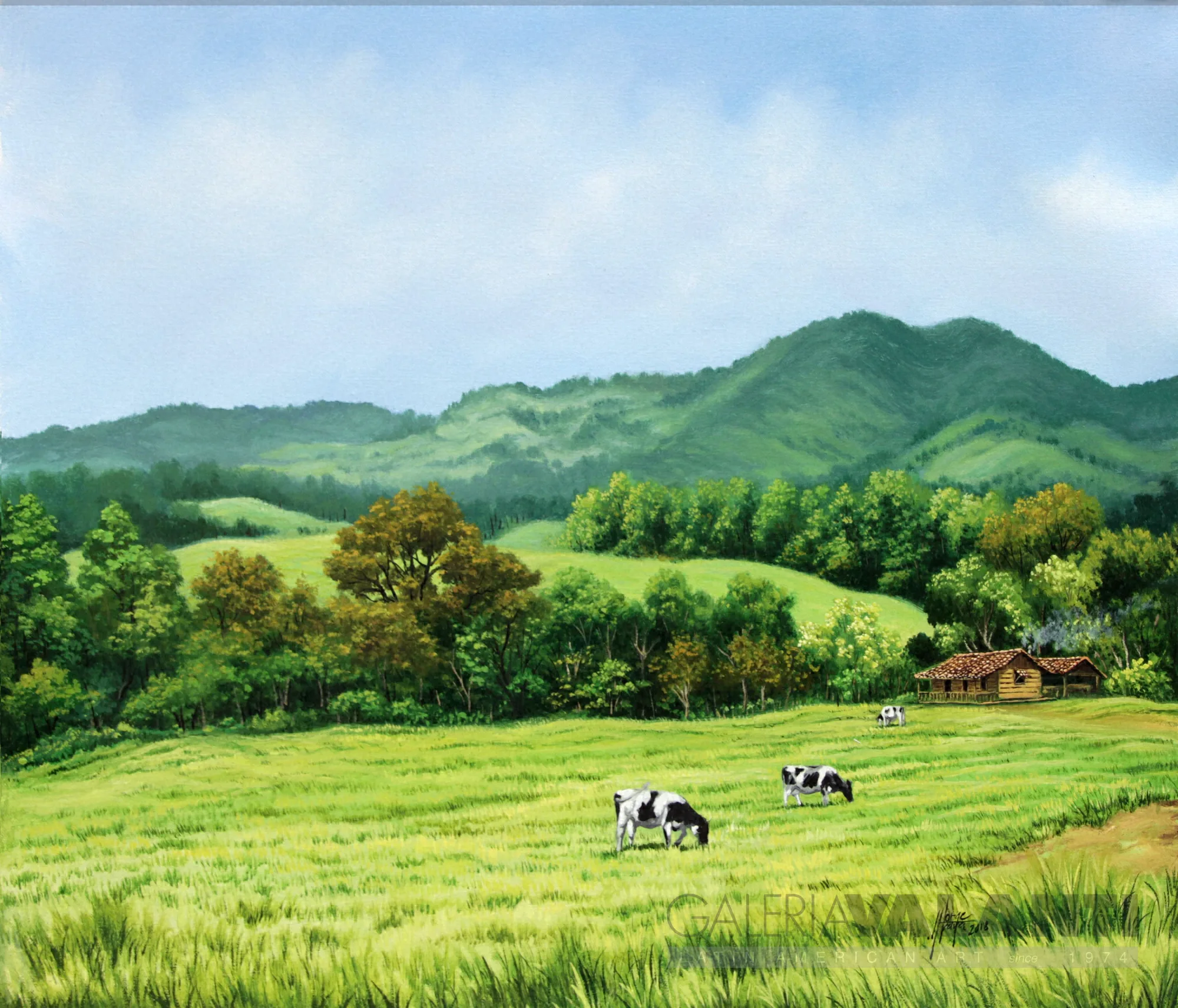
- Potrero en OrosiJorge Araya · 2018
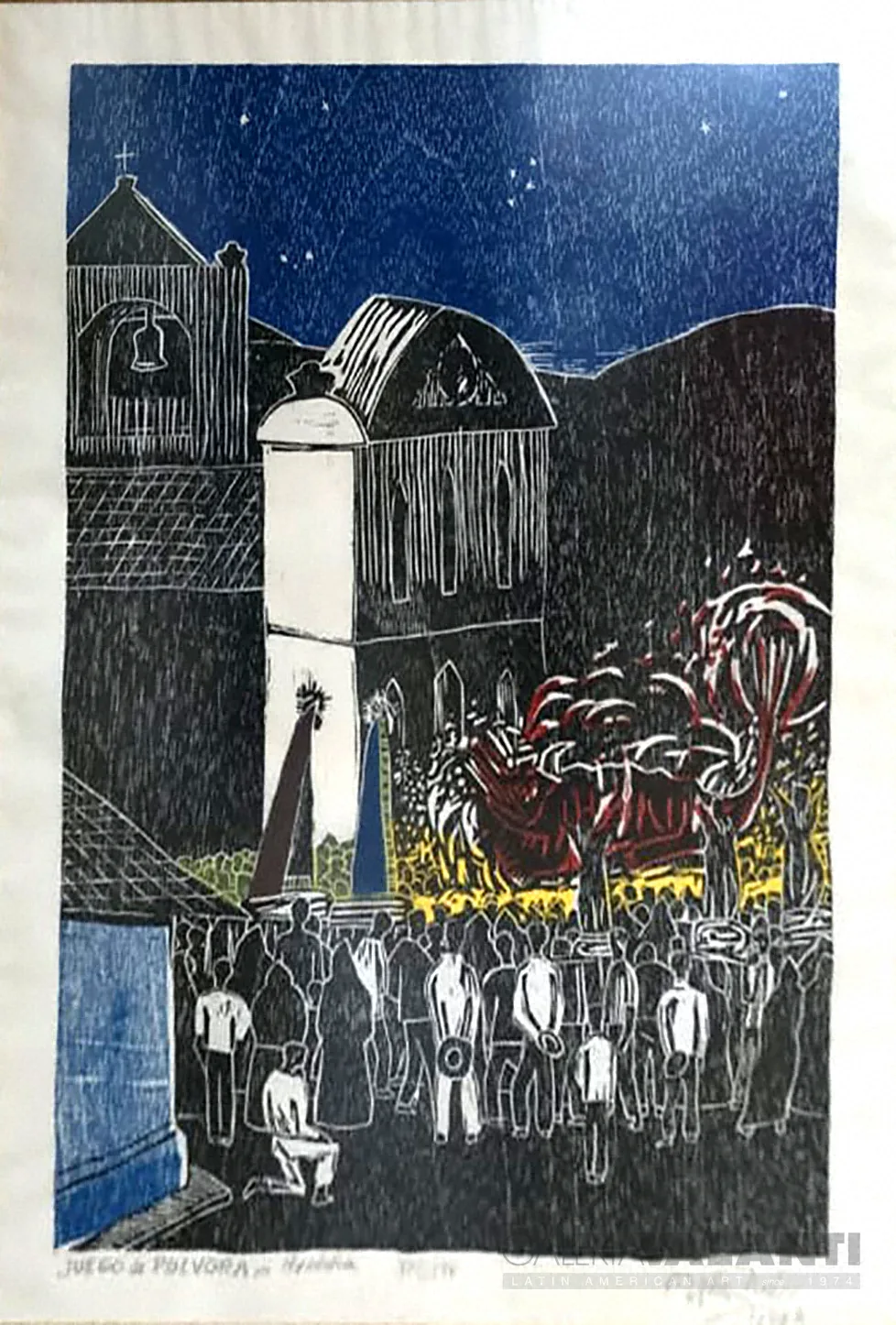
- Juegos de Pólvora en HerediaFrancisco Amighetti · 1983
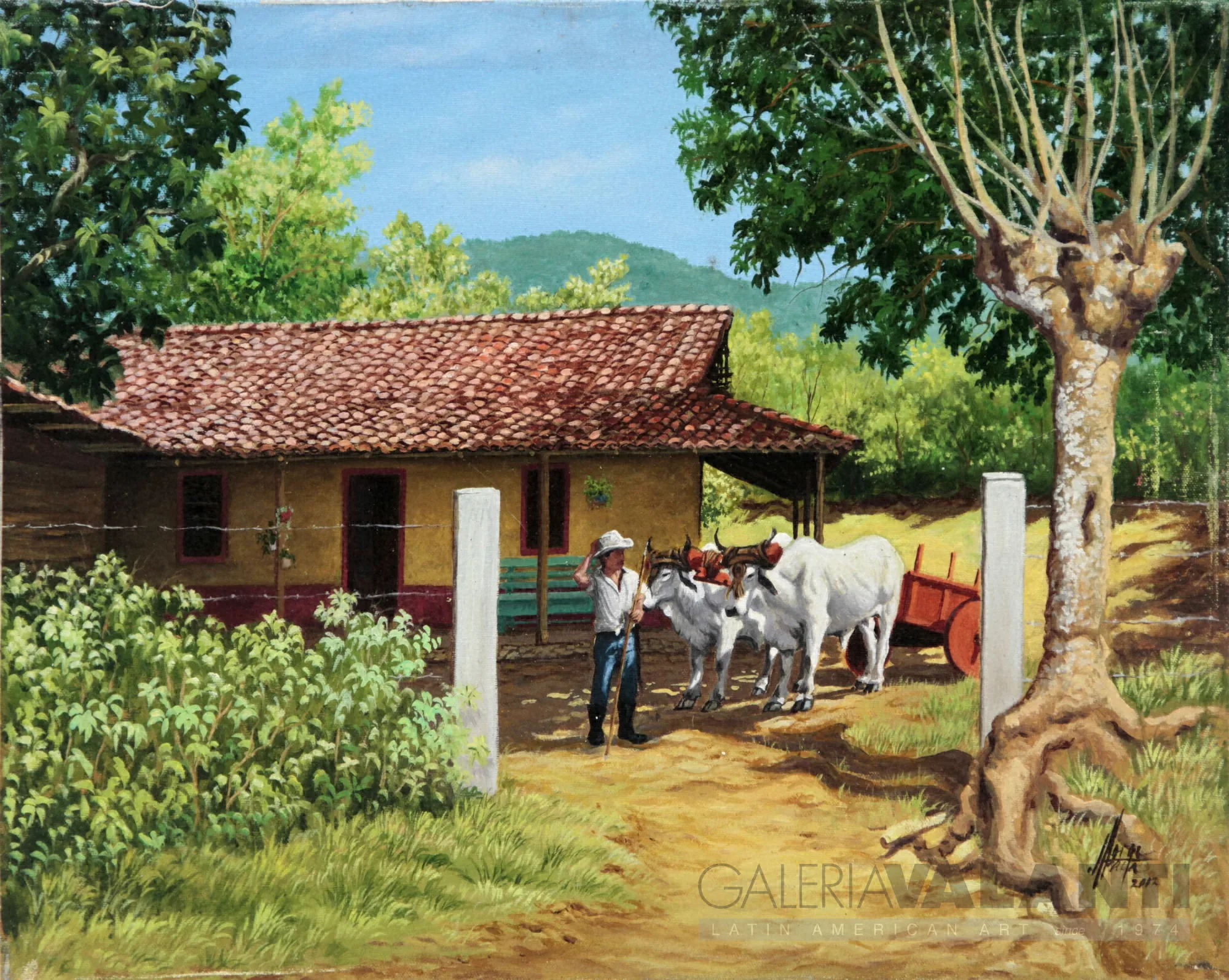
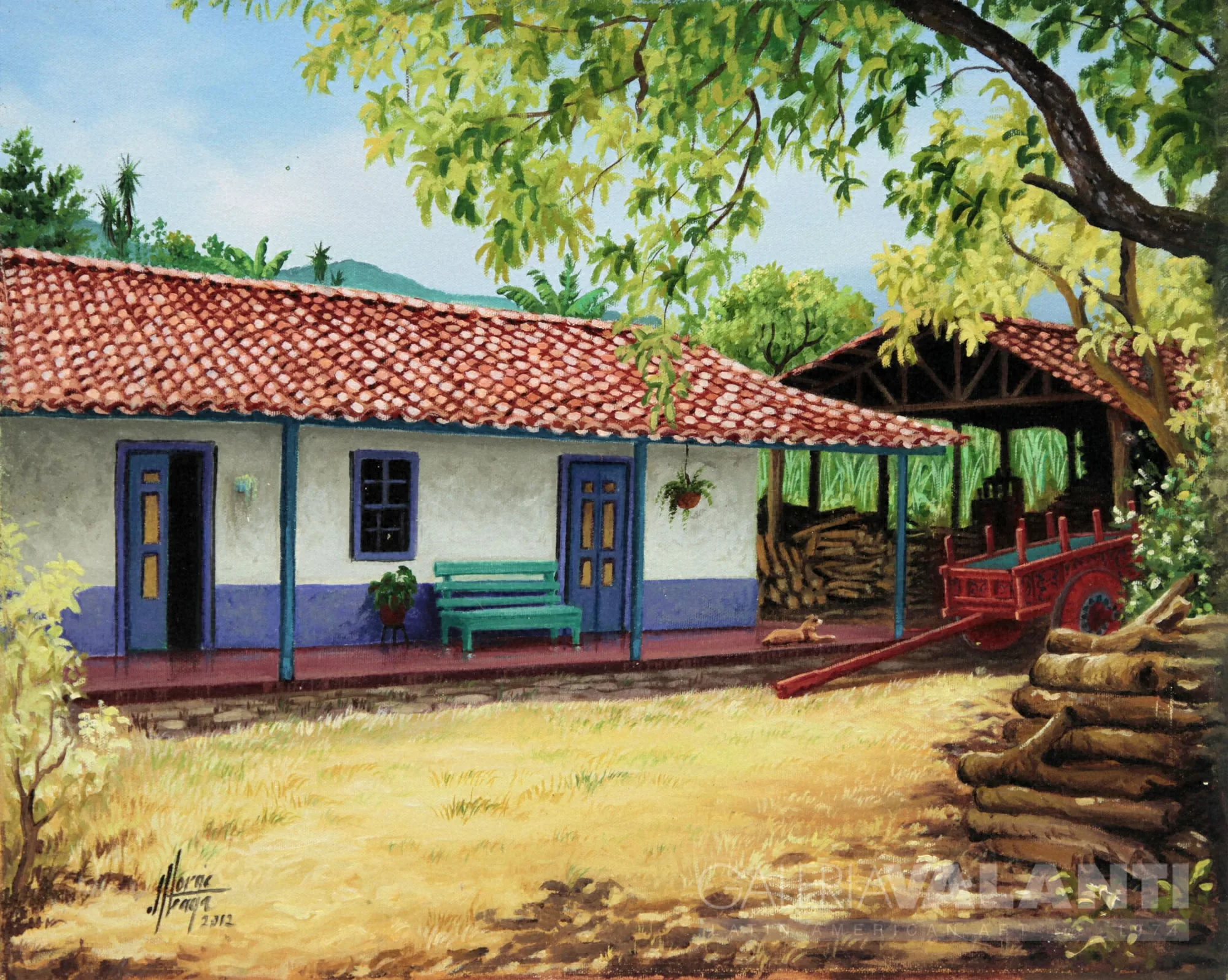
- Escena Típica San Antonio de EscazúInquire about availabilityJorge Araya · 2012
- Casa San Antonio EscazúInquire about availabilityJorge Araya · 2022
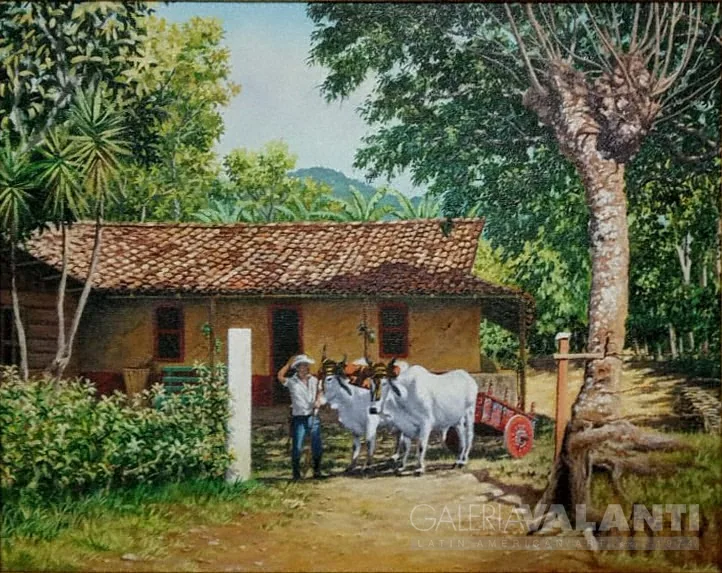
- Casa Típica de EscazúInquire about availabilityJorge Araya · 2012
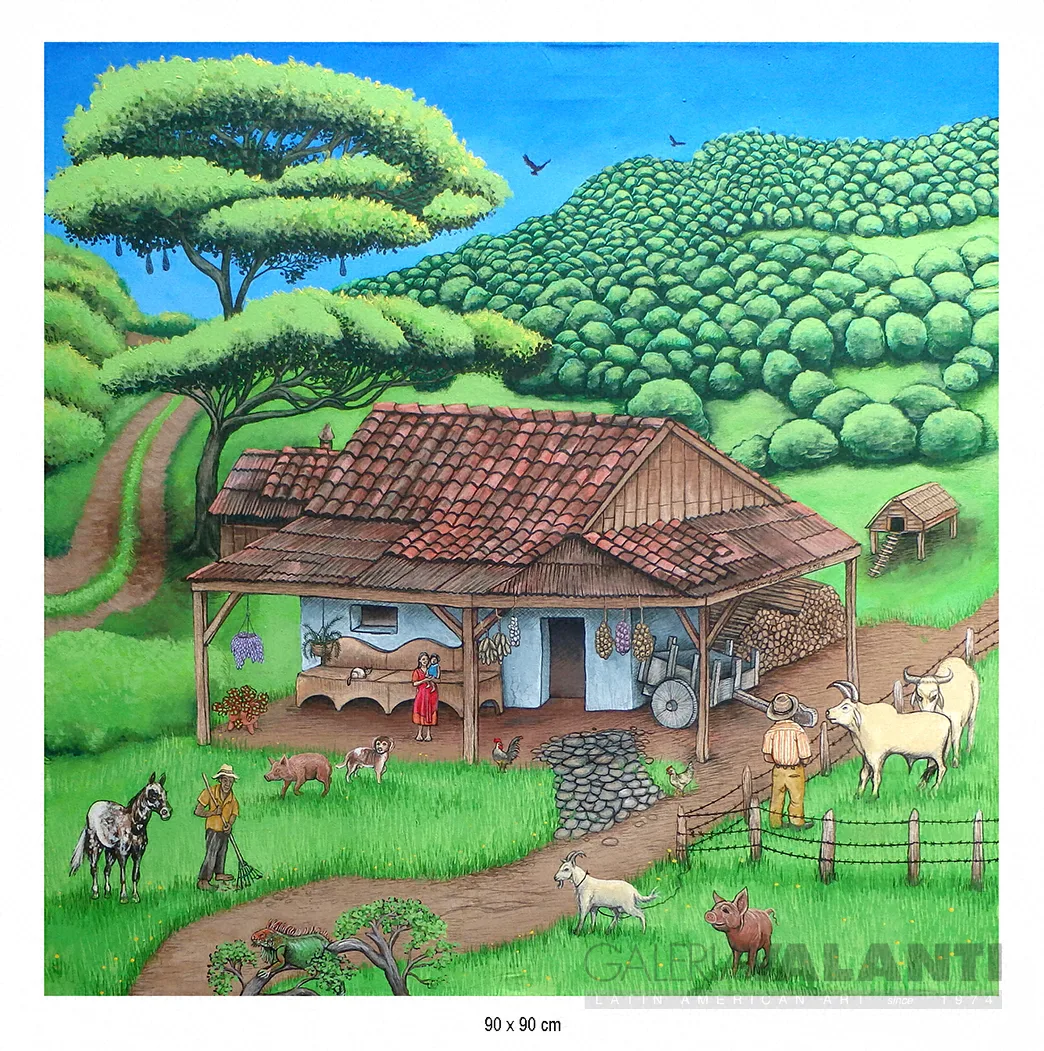
- “Finquita”Inquire about availabilityJosé Alejandro Herrera · 2024
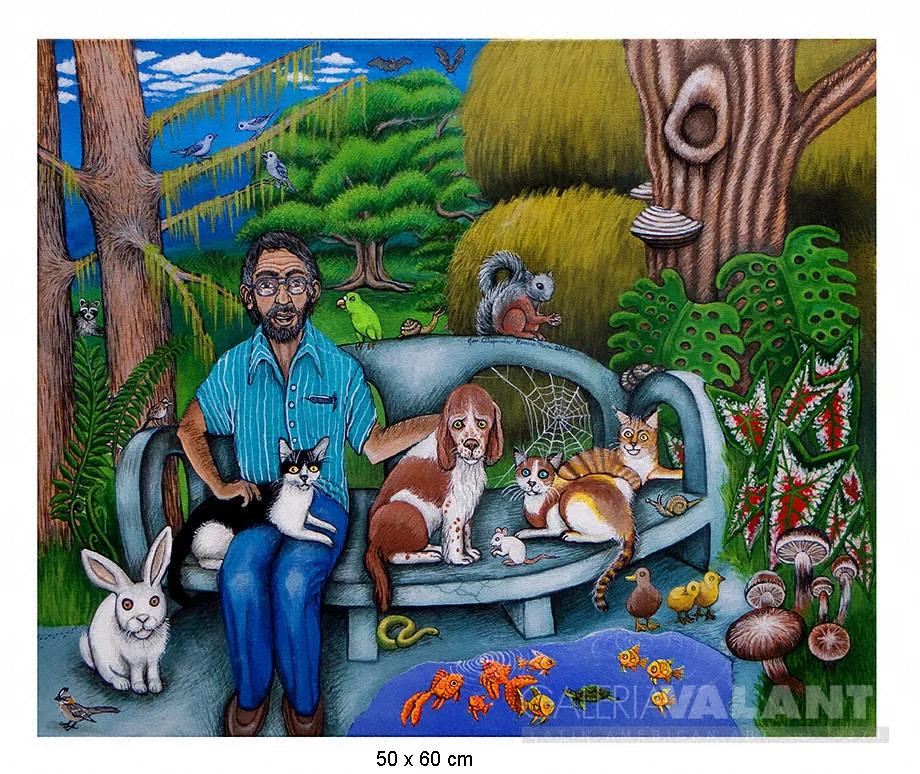
- Compañeros de la vidaInquire about availabilityJosé Alejandro Herrera · 2022
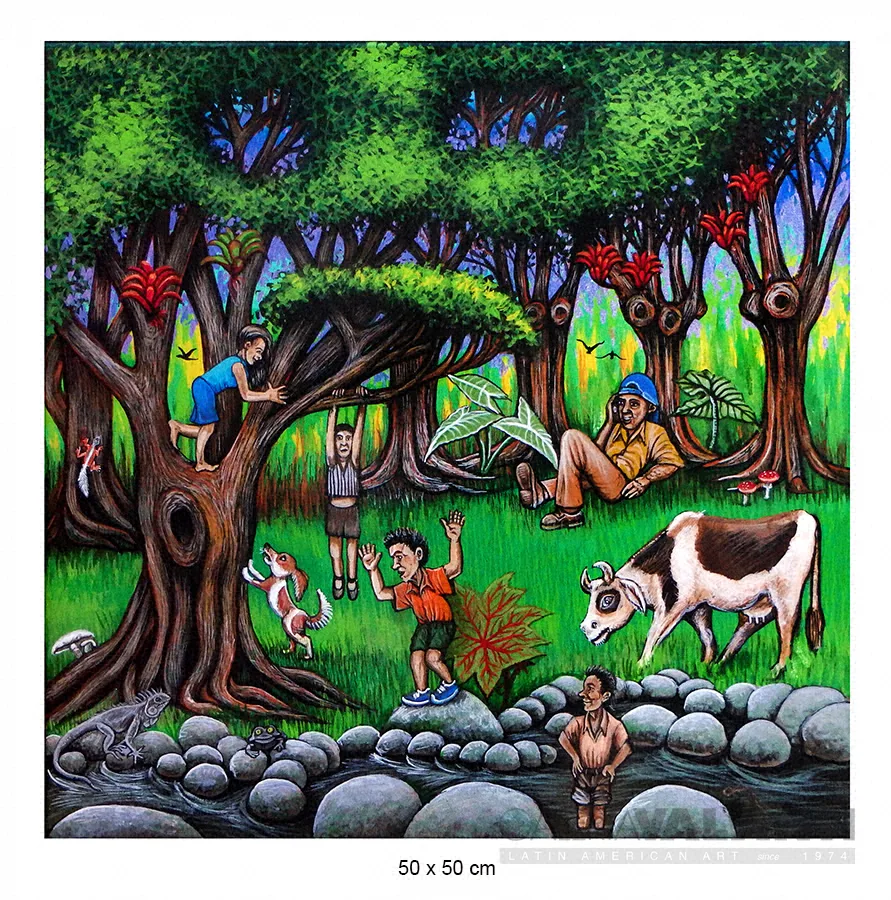
- Paseando por un ríoInquire about availabilityJosé Alejandro Herrera · 2024
- Noche de CarnavalInquire about availabilityRafael Fernández · 2011
- Yunta BueyesInquire about availabilityJorge Araya · 2022
- Paseando en CarretaSoldJorge Araya · 2018
- Pasando por el Trapiche de Tite SandovalSoldJorge Araya · 2018