History
More than five decades of art, knowledge, integration and cultural commitment
History, legacy and contribution to Costa Rican, Central American, Latin American and international art
Timeline
1974
Marta Antillón founded Redeco, which would eventually become Galería Valanti.
Redeco was founded in 1974 and began with an exhibition by the Costa Rican master Rafael Fernández.
1976
Marta Antillón founds Redeco, in Barrio Escalante
Marta Antillón founded Redeco, in Barrio Escalante, where she began her career as a gallerist. It is documented as an active gallery between 1976 and 1978, with exhibitions by artists such as Miguel Ángel Brenes, Tom Báez and Rafa Fernández.
1979
Centro de Arte y Decoración 2000
In 1979, in Barrio Matute Gómez, Marta Antillón opened the Centro de Arte y Decoración 2000, also known as Galería 2000, documented in 1980, 1981 and 1986.
1980
From the 1980s: art classes and workshops
Since the 1980s, the Gallery has offered art classes and workshops taught by fundamental figures of Costa Rican art, among them Rafael Fernández, Margarita Bertheau, Gonzalo Morales and Francisco Amighetti.
1992
Galería Centro
After Galería 2000, Marta Antillón and Eugenia Valerio de Lachner were partners in Galería Centro. In 1992 they still appear together at an exhibition by Francisco Amighetti. By the early part of that decade, the name Galería Valanti was already in use.
- 1992
Casa de Arte
Casa de Arte, a framing shop, also opened in 1992.
1994
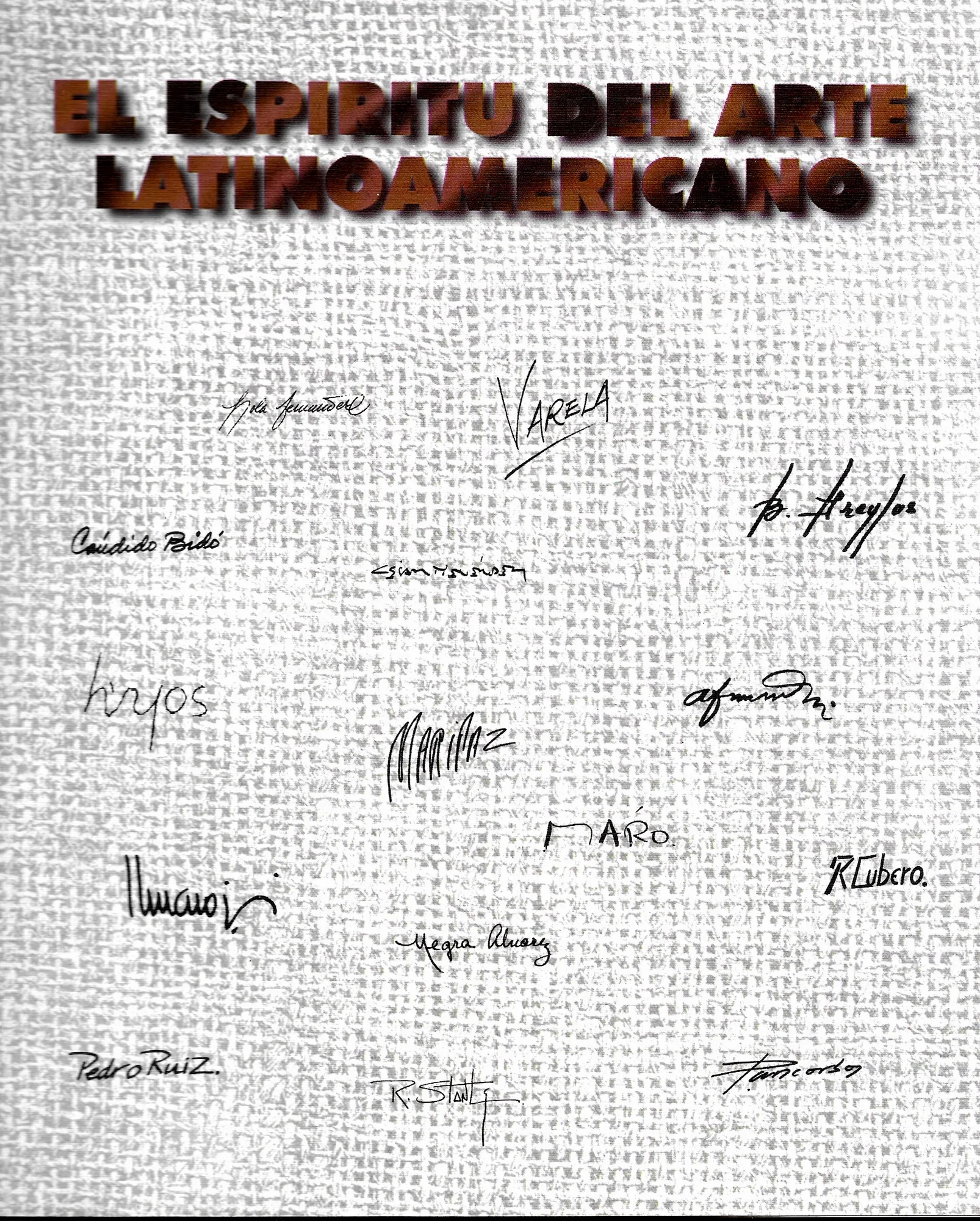
“The Spirit of Latin American Art”
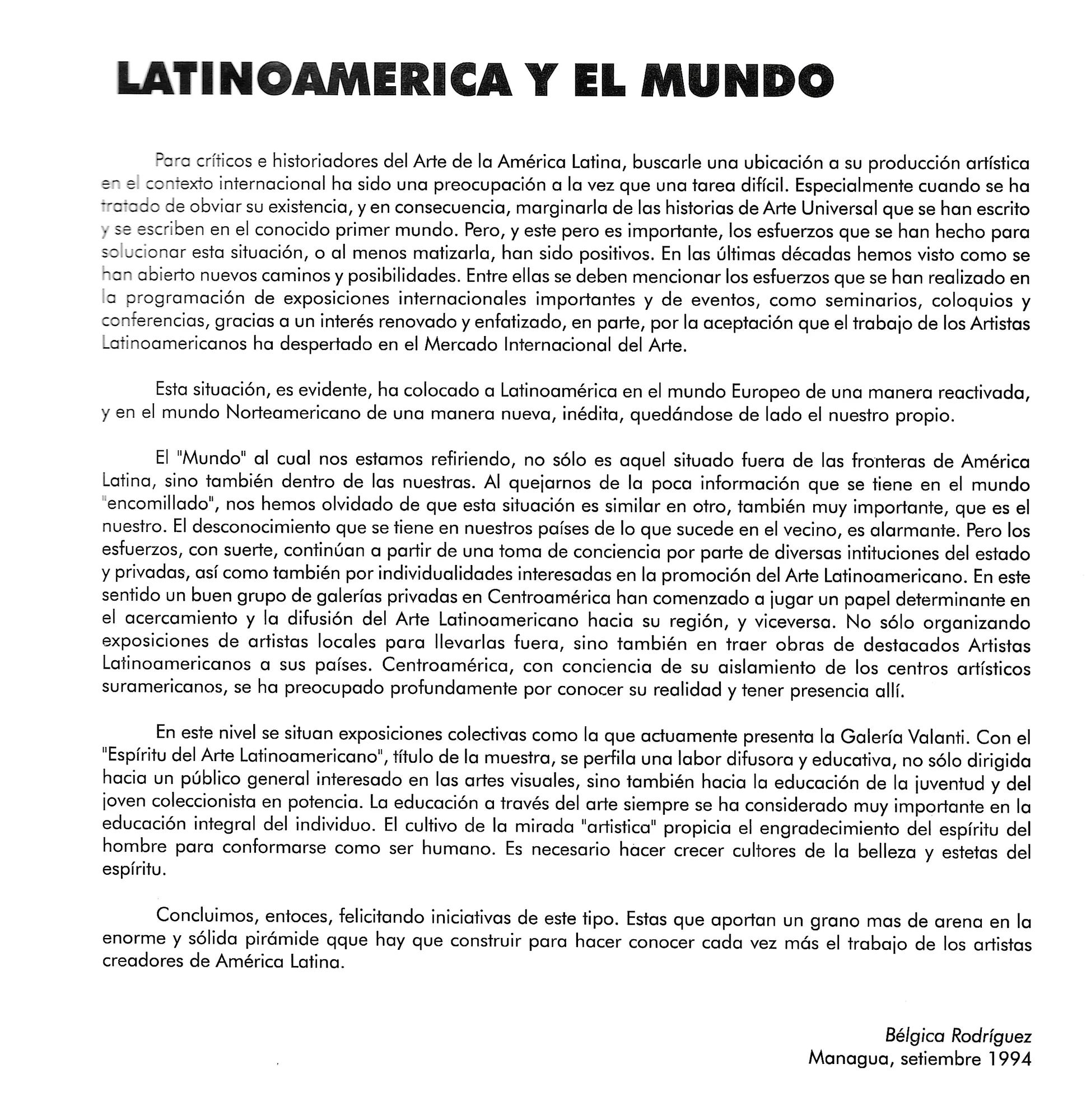
The 1994 catalog came with a text by Bélgica Rodríguez with the telling title “Latinoamérica y el Mundo” (“Latin America and the World”), dated in Managua in September of that year.
1995
First seminars with Dr. Bélgica Rodríguez
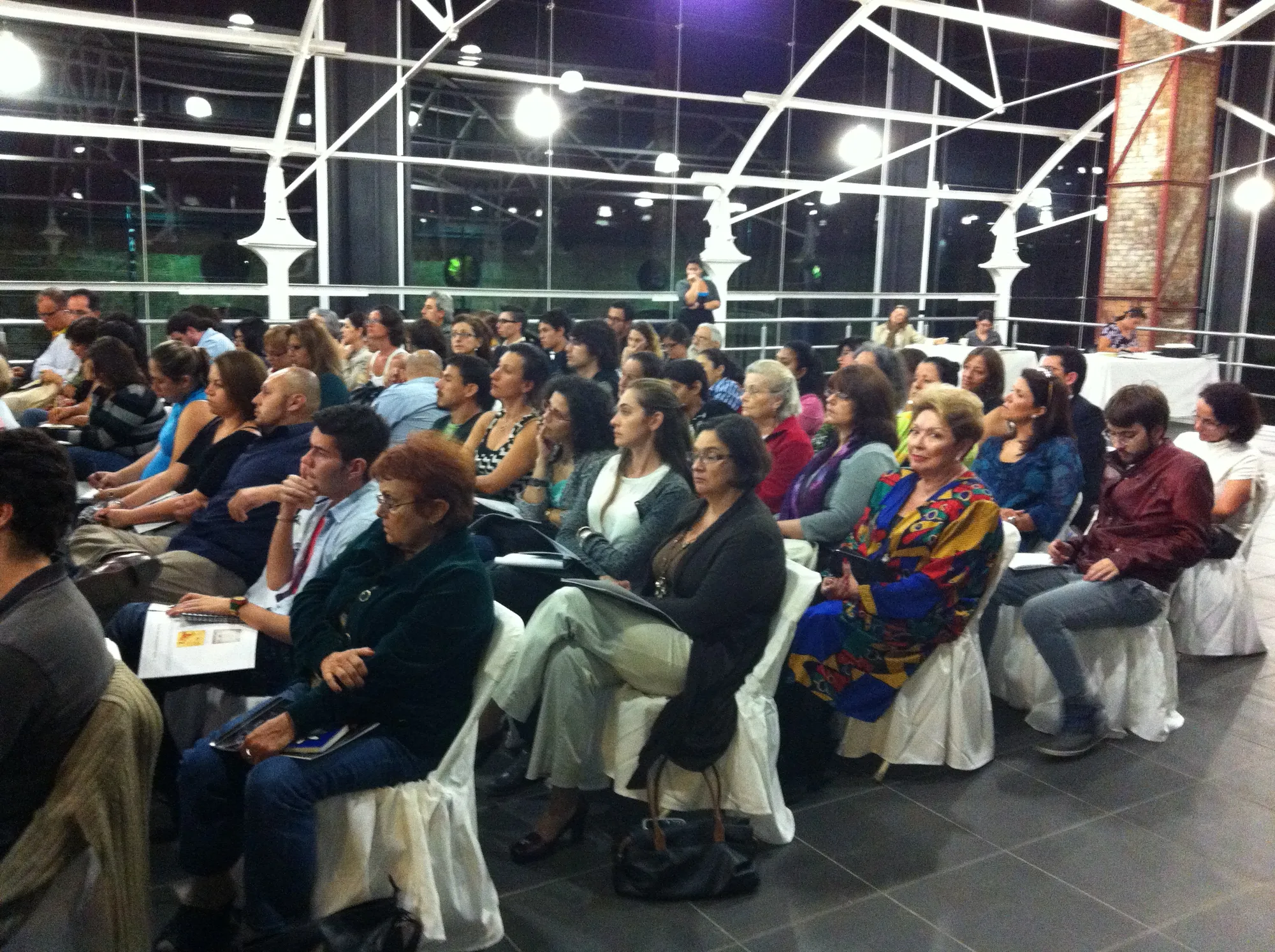
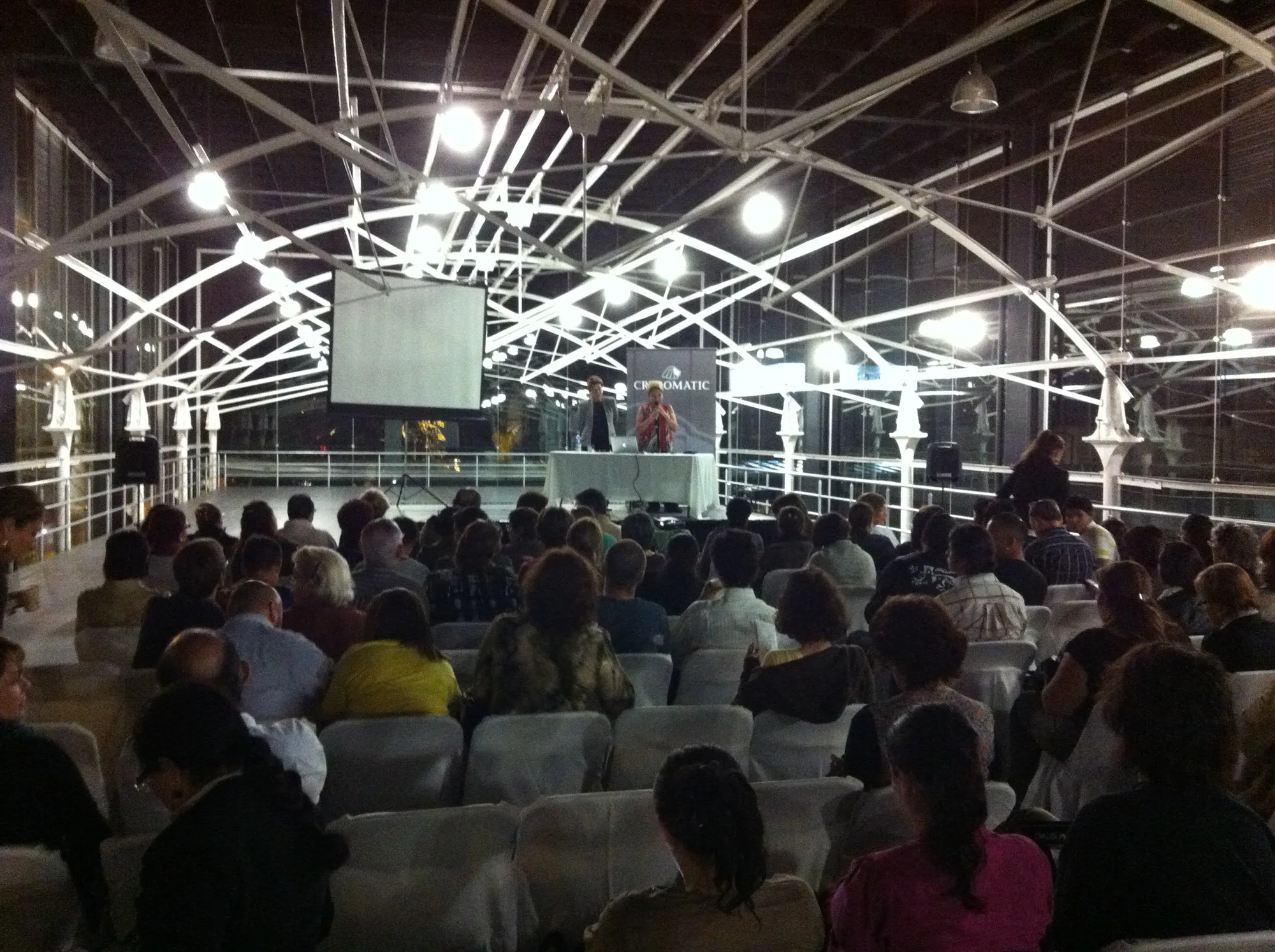
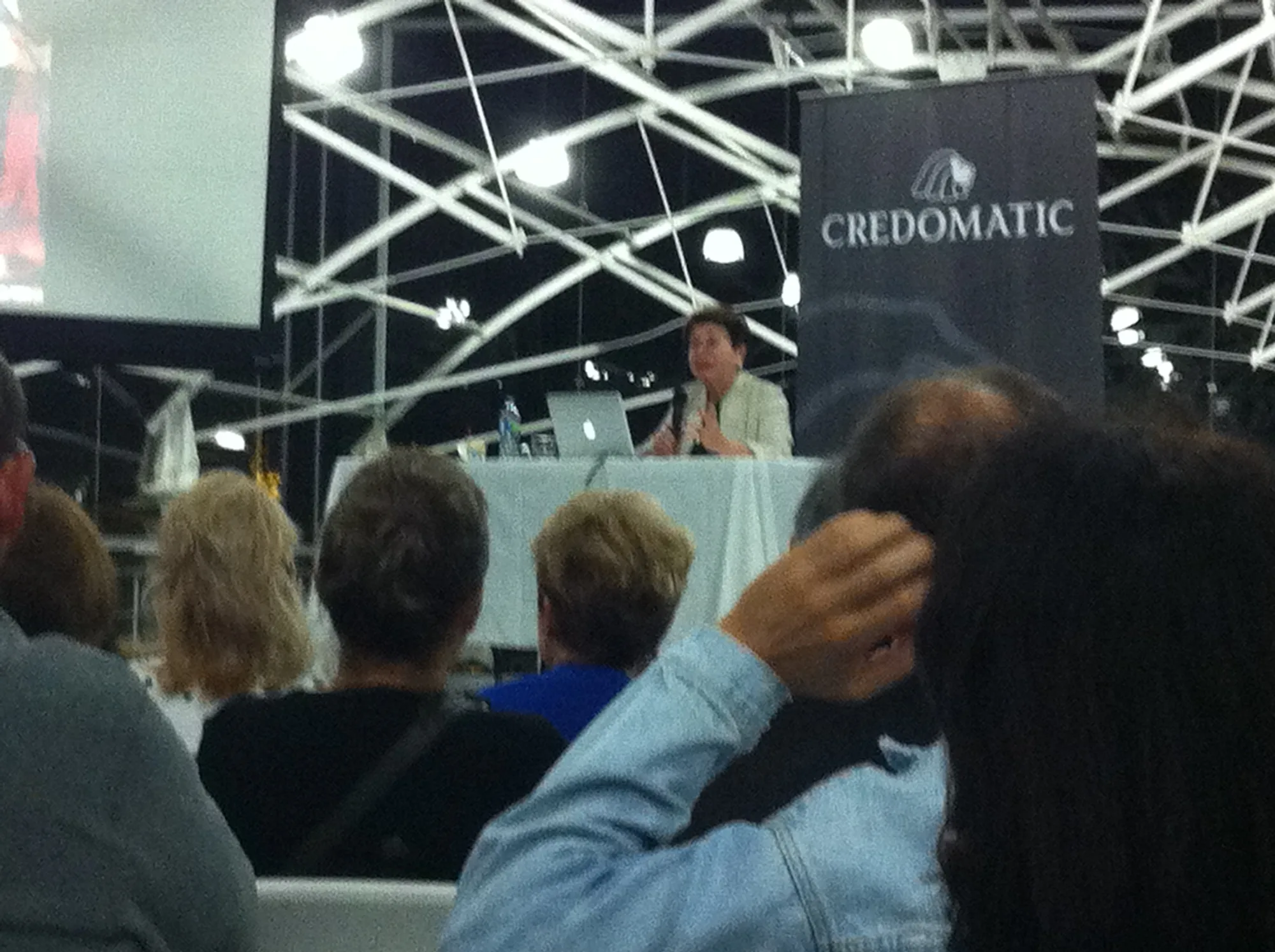
Beginning in 1995, Galería Valanti promoted an extensive series of seminars on the history, appreciation and thought of art, taught by the renowned Venezuelan historian and critic Dr. Bélgica Rodríguez.
1997
Second edition of “The Spirit of Latin American Art”
In 1997, Galería Valanti presented “The Spirit of Latin American Art” again. The catalog’s cover is a particularly significant document: under the Gallery’s name appeared the words “LATIN AMERICAN ART”.
1998
CAUSA is established in Managua
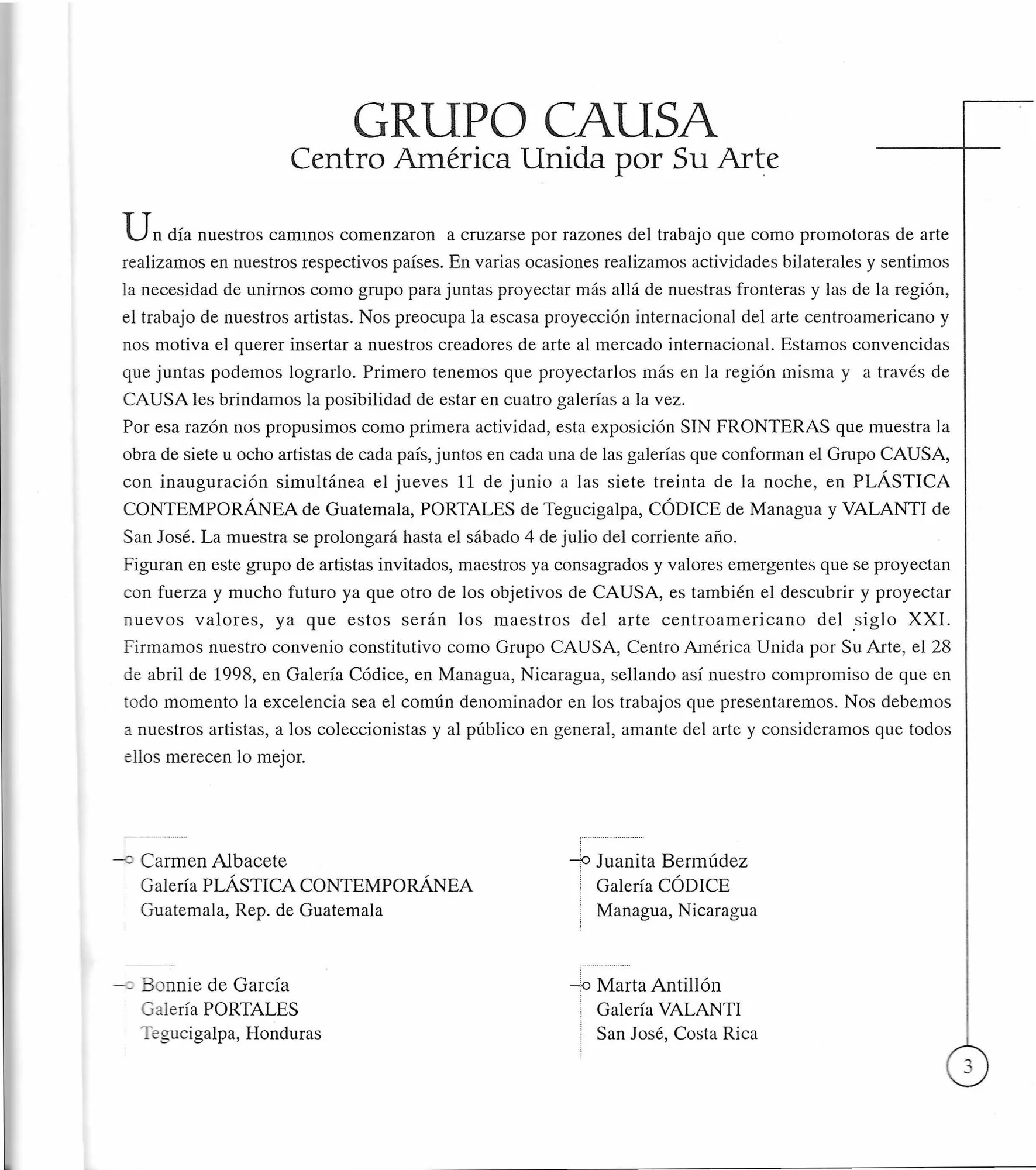
CAUSA – Centro América Unida por Su Arte (Central America United for Its Art) was formally established on April 28, 1998, at Galería Códice in Managua, Nicaragua, by Carmen Albacete (Galería Plástica Contemporánea, Guatemala), Bonnie de García (Galería Portales, Honduras), Juanita Bermúdez (Galería Códice, Nicaragua) and Marta Antillón (Galería Valanti, Costa Rica).
- 1998
“Sin Fronteras”, opening in four countries at once
The exhibition opened simultaneously on June 11, 1998 in Guatemala, Honduras, Nicaragua and Costa Rica, and stayed open until July 4.
2006
Two locations: Barrio Escalante and Terra Mall
In July 2006, Galería Valanti had two locations: Barrio Escalante and Terra Mall, on the road to Cartago. Source: The Tico Times, July 28, 2006. The Terra Mall location closed that same year.
2007
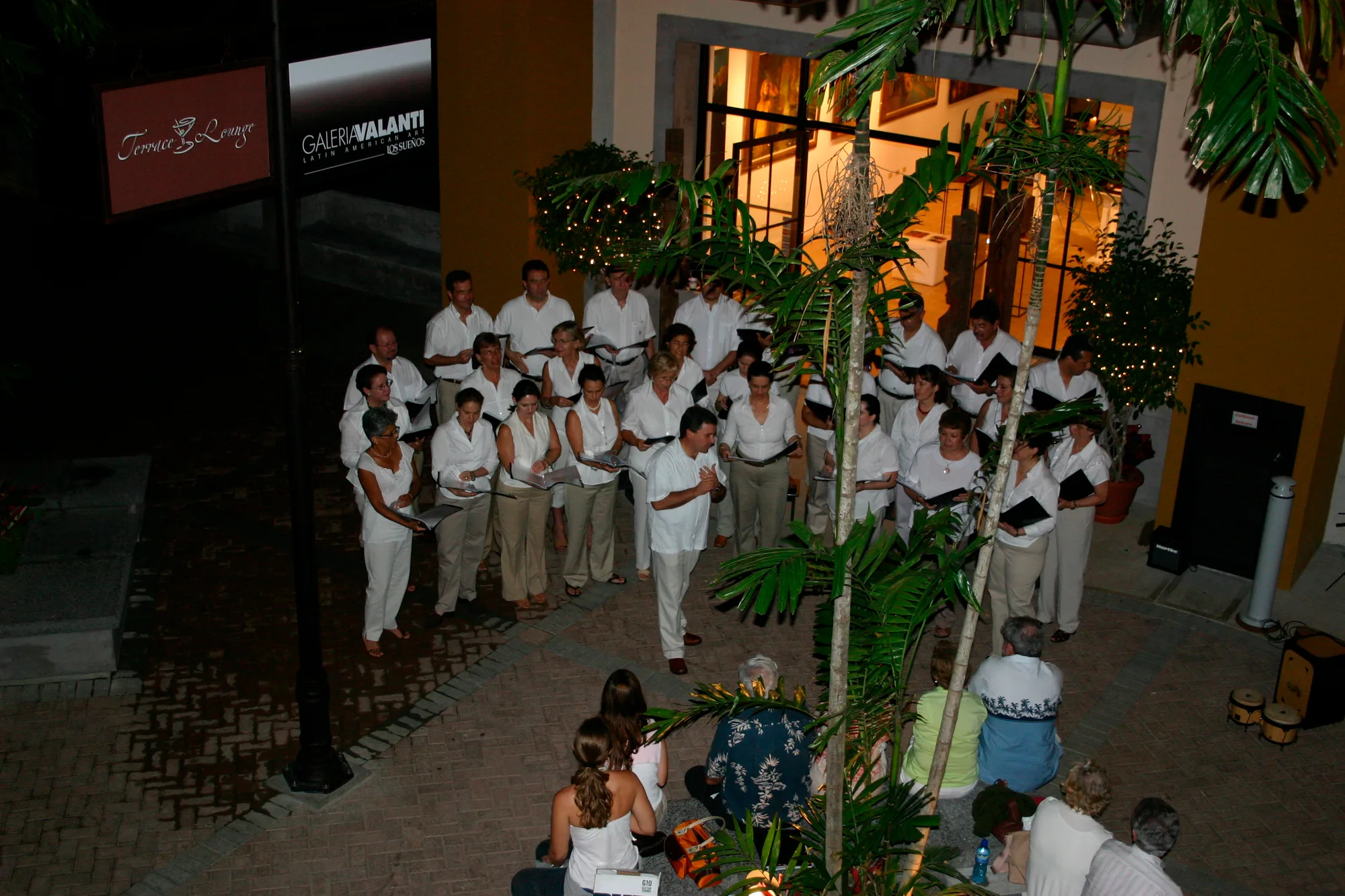
Opening of the Marina Los Sueños location
An interview with Marta Antillón was published in La Nación on the recent opening of a Galería Valanti location at the Hotel & Marina Village Los Sueños, in Playa Herradura. Source: “Marta Antillón, marinera en tierra”, Áncora, La Nación, January 28, 2007. The location is documented as active until 2012 and closed around 2013 or 2014.
2009
Country Art Café, Costa Rica Country Club
Galería Valanti presented exhibitions and seminars at the Country Art Café of the Costa Rica Country Club, in San José. Sources: Maricel Alvarado’s résumé, SiCultura (2009), and La Nación, October 15, 2015, on Álvaro Gómez’s exhibition “Floración”.
2012
19 seminars with Dr. Bélgica Rodríguez
A 2012 article in La Nación documented that by then Rodríguez had taught 19 seminars at the invitation of Galería Valanti.
To the present
International fairs
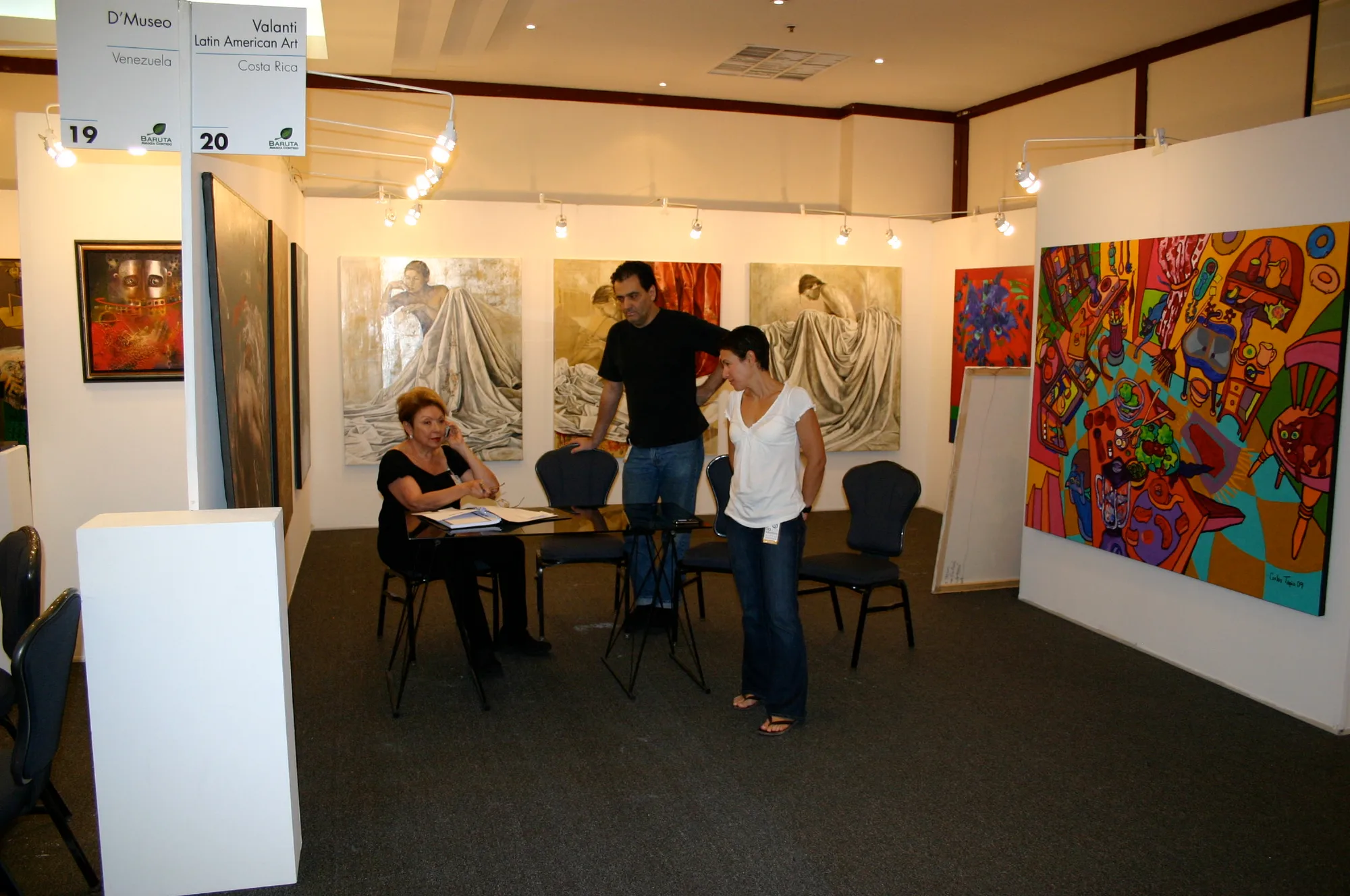
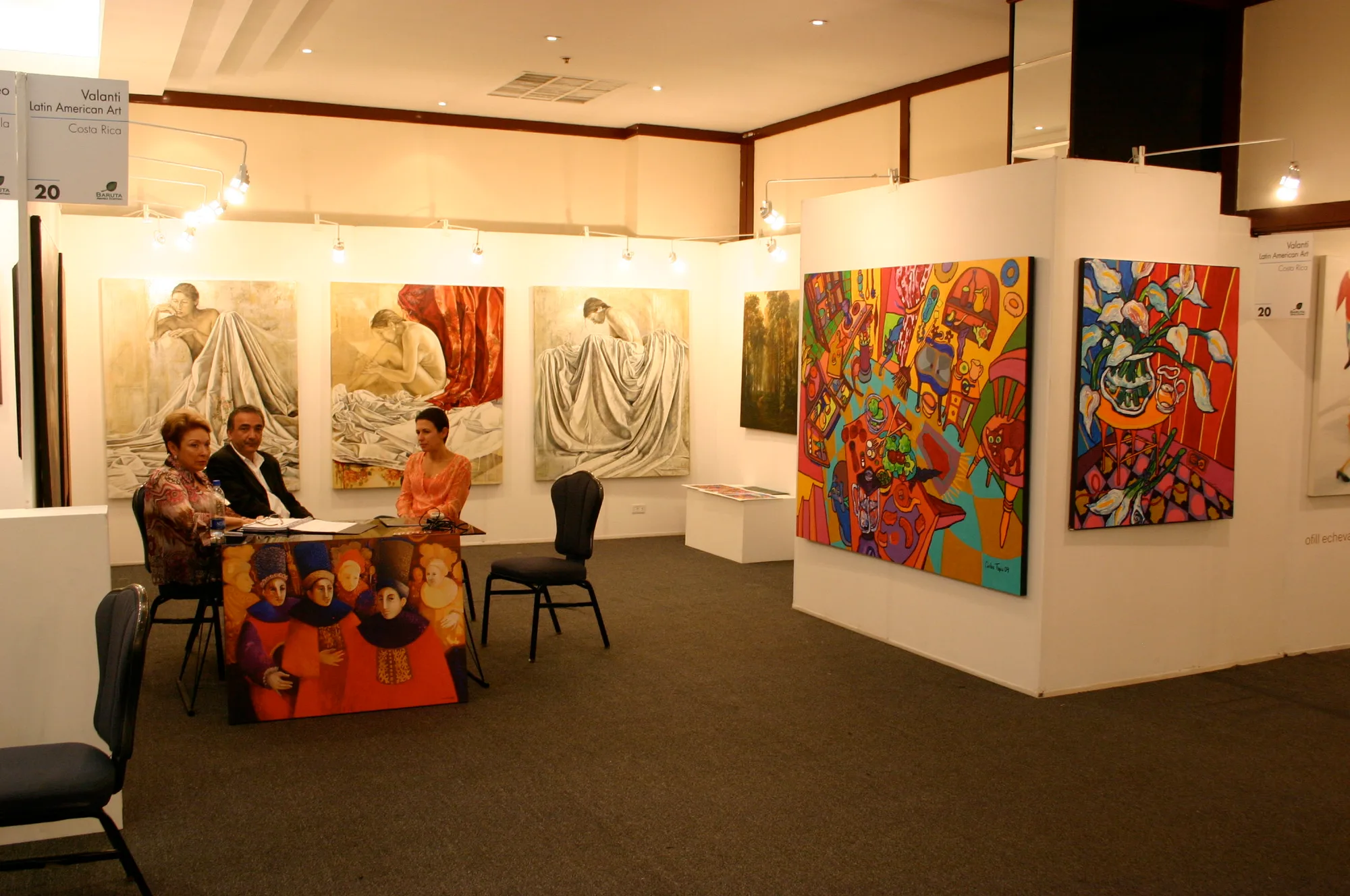
Throughout its career, the Gallery has taken part in the Feria Internacional de Arte (FIA) in Caracas, the Pinta Art Show in New York and the LA Art Show in Los Angeles, among other venues.
- To the present
Francisco Castro Antillón joins the gallery
The arrival of Francisco Castro Antillón, Marta Antillón’s son, represents the generational continuity of the project and a new stage in the evolution of Galería Valanti.
Introduction
Since its founding in 1974, Galería Valanti has built a career closely tied to the evolution of the visual arts in Costa Rica and to the country’s opening toward Central American, Latin American and international art.
More than five decades of continuous activity mean much more than staying power. They mean having accompanied generations of artists, having helped to educate audiences and collectors, having built relationships with critics, historians, galleries and institutions, and having taken an active part in initiatives meant to widen the cultural frontiers of art.
The history of Galería Valanti can be understood through a conviction that has remained over the years: a responsible gallery does not only exhibit and sell works of art. It selects, researches, educates, documents, preserves, promotes, connects and helps to build a legacy.
This responsibility extends to the artists, whose work and career it represents; to the collectors, who place their trust in the Gallery’s judgment; to the public, who find in it a place to approach art and learn about it; and to the works themselves, which are cultural testimonies that must be valued, documented and preserved.
The origins: a gallery for Costa Rican art
Galería Valanti was founded in 1974 and began with an exhibition by the Costa Rican master Rafael Fernández.
In its first years the Gallery focused its work on promoting Costa Rican art, creating opportunities to exhibit and sell for its artists and helping to build a more professional relationship among creators, gallerists, public and collectors.
From its first decades, Valanti kept a close relationship with important figures of national art and gradually developed a philosophy in which the quality of the work, the seriousness of the artist’s career and the collector’s trust became fundamental elements.
But the Gallery’s vision did not stay within Costa Rica’s borders. As the market evolved and cultural relationships widened, Valanti began to look toward Central America, the Caribbean and Latin America, building ties that would later reach international stages.
Educating to learn to see
One of the most important, and possibly least known, aspects of the history of Galería Valanti has been its commitment to art education and to the formation of audiences.
Since the 1980s, the Gallery has offered art classes and workshops taught by fundamental figures of Costa Rican art, among them Rafael Fernández, Margarita Bertheau, Gonzalo Morales and Francisco Amighetti.
These activities rested on a broad idea of what a gallery does: to develop a true culture around art it was not enough to exhibit works; it was also necessary to create the knowledge, sensitivity and judgment needed to appreciate them.
This educational philosophy would later find one of its most important expressions in the seminars Galería Valanti organized with Dr. Bélgica Rodríguez.
19 seminars with Dr. Bélgica Rodríguez
Knowledge of art, open to the public
Beginning in 1995, Galería Valanti promoted an extensive series of seminars on the history, appreciation and thought of art, taught by the renowned Venezuelan historian and critic Dr. Bélgica Rodríguez, an internationally relevant figure in the study of Latin American art and a past president of the International Association of Art Critics (AICA).
A 2012 article in La Nación documented that by then Rodríguez had taught 19 seminars at the invitation of Galería Valanti.
These seminars were conceived with an important educational purpose: to bring knowledge of art to people interested in learning, whether they were artists, students, collectors or simply art lovers.
According to Galería Valanti’s institutional record, these meetings were offered free of charge to the public, with the sponsorship of Ernesto Castegnaro during this period, as part of a joint effort to widen access to culture and to artistic knowledge.
The research done so far has identified some of their contents and titles, among them:
- 1997: The 20th Century: Latin American Art and the History of Universal Art.
- 2000: A View of the 20th Century as Infinite Revolution.
- 2001: Five Great Moments in the History of Art.
- 2003: Latin America, Pre-Hispanic and Baroque in Contemporary Art.
- 2009: Appreciation and Understanding of the Language of Art.
- 2010: Sublime Masters of Universal Art and Their Time.
- 2011: The History of Beauty and Art in Latin America II.
- 2012: The History of Art Through a Line.
Beyond their individual titles, the importance of these seminars lies in their continuity. For years, Galería Valanti devoted organization, relationships and resources to an activity whose main goal was to share knowledge.
This work expresses an idea that remains essential to Valanti:
Knowing art makes it possible to appreciate it better; appreciating it makes it possible to understand its quality; and understanding its quality makes it possible to collect with greater judgment and responsibility.
“The Spirit of Latin American Art”
Integration, knowledge and openness to the world
During the 1990s, Galería Valanti developed one of the initiatives that best document its Latin American vocation: “El Espíritu del Arte Latinoamericano” (“The Spirit of Latin American Art”).
The historical documentation the Gallery keeps confirms, at least, exhibitions held in 1994 and 1997.
These exhibitions should not be understood only as group shows. They stood for a will to open a dialogue between Costa Rica and the rest of Latin America, bringing the Costa Rican public different generations, trends and artistic expressions from the continent.
1994 — “Latin America and the World”
The 1994 catalog came with a text by Bélgica Rodríguez with the telling title “Latinoamérica y el Mundo” (“Latin America and the World”), dated in Managua in September of that year.
Rodríguez reflected on the need to find a place for Latin American art production within the international context, and on the efforts made to increase its presence and recognition. But she also introduced a fundamental thought: Latin America had to project itself toward Europe and North America, but it also needed to get to know itself.
In that context, she highlighted the role that private Central American galleries were beginning to play, both by taking works by Latin American artists to other countries and by bringing the region’s art to their own publics. And she expressly placed Galería Valanti’s exhibition “The Spirit of Latin American Art” within that effort of dissemination and integration.
According to Rodríguez, the exhibition also had an important educational dimension, aimed not only at the public interested in the visual arts but also at young people and new collectors.
1997 — The consolidation of a Latin American identity
In 1997, Galería Valanti presented “The Spirit of Latin American Art” again. The catalog’s cover is a particularly significant document: under the Gallery’s name appeared the words “LATIN AMERICAN ART”.
This shows that by then the Latin American vocation was not just an occasional activity but had clearly become part of Valanti’s identity.
The exhibition brought together different generations and trends and included artists such as Rafa Fernández, José Luis Cuevas, Fernando de Szyszlo, Armando Morales, Oswaldo Guayasamín, Rodolfo Abularach, Leónel González, Fernando Carballo and Héctor Campos, among others.
The meaning of these exhibitions goes beyond their dates: they are documentary evidence of a Gallery that sought to place the Costa Rican artist within the Latin American context and, at the same time, to bring to Costa Rica some of the continent’s relevant artistic voices.
CAUSA – Central America United for Its Art
Central American integration put into action
In 1998, that philosophy of integration took on a new dimension with the founding of CAUSA – Centro América Unida por Su Arte (Central America United for Its Art).
The project’s historical documentation makes its founders’ motivations clear. Four Central American art promoters, after carrying out various bilateral activities, concluded that it was necessary to join forces to project their artists beyond the borders of their own countries and of the region itself.
The diagnosis was clear: the little international exposure of Central American art called for building new platforms and relationships able to place its creators in the international market.
CAUSA was formally established on April 28, 1998, at Galería Códice in Managua, Nicaragua, by:
- Carmen Albacete, of Galería Plástica Contemporánea, Guatemala;
- Bonnie de García, of Galería Portales, Honduras;
- Juanita Bermúdez, of Galería Códice, Nicaragua; and
- Marta Antillón, of Galería Valanti, Costa Rica.
“Sin Fronteras” (“Without Borders”)
The group’s first activity was an exhibition titled “Sin Fronteras”. The concept was remarkably consistent with CAUSA’s philosophy: works by seven or eight artists from each country would be shown together in the four member galleries.
The exhibition opened simultaneously on June 11, 1998 in Guatemala, Honduras, Nicaragua and Costa Rica, and stayed open until July 4.
CAUSA also pursued a second, particularly visionary goal: alongside established masters and artists, it sought to discover and project new talents, understanding that some of those young artists would become the Central American masters of the 21st century.
“Let excellence be the common denominator”
A gallery’s responsibility
CAUSA’s founding document contains a statement that, more than two decades later, sums up remarkably well one of the principles that should define Galería Valanti today. The four gallerists put on record their commitment to ensure that:
“excellence be the common denominator”
in the work they presented. And they added an even more important consideration: they recognized that they had a responsibility to their artists, to collectors and to the art-loving public, who deserved the best.
This 1998 statement helps us understand that the concept of quality we want to emphasize today in the positioning of Galería Valanti is not a new marketing strategy. It is a principle with historical antecedents in its own career.
Quality implies responsibility.
A gallery puts its name and its reputation behind every artist it represents and every work it recommends. That is why selecting is taking on a responsibility.
- Responsibility for the quality of the works.
- Responsibility for the seriousness and career of the artists.
- Responsibility for the information and documentation that accompany each piece.
- And responsibility for the trust the collector places in the Gallery.
Central America: diversity without borders
The CAUSA book also shows the remarkable diversity of Central American art production at that moment.
Its texts present historic, established and emerging artists from Guatemala, Honduras, Nicaragua and Costa Rica, working in different languages: figuration, abstraction, expressionism, conceptualism, popular tradition and new contemporary expressions.
The Costa Rican representation includes, among others, Lola Fernández, Adrián Arguedas, Hernán Pérez, Jorge Tamayo, Rolando Cubero, Rodolfo Stanley, Fernando Carballo and Olger Villegas.
CAUSA did not seek to make Central American art production uniform. It sought precisely to give visibility to its diversity and turn it into a regional strength.
From Costa Rica to the world
Galería Valanti’s international vocation kept developing through its participation in important art circuits.
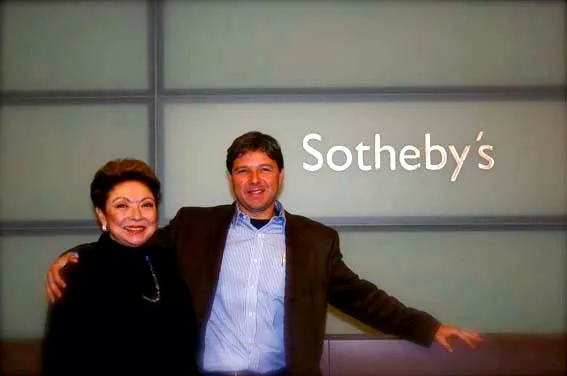
Throughout its career, the Gallery has taken part in the Feria Internacional de Arte (FIA) in Caracas, the Pinta Art Show in New York and the LA Art Show in Los Angeles, among other venues. It has also accompanied the presence of Latin American works within the international Latin American art auctions of Sotheby’s and Christie’s.
At the same time, Valanti’s representation gradually went beyond the Central American and Latin American sphere. Artists from Costa Rica, Central America, the Caribbean and South America were joined by creators from countries such as Spain, Italy, England, Ukraine, Russia and the Netherlands, among others.
This evolution can be summed up as:
- Costa Rica
- Central America and the Caribbean
- Latin America
- the world
But geographic breadth should never be the goal in itself. The principle that connects all these regions is the quality of the artistic proposal.
The artist: the origin of everything
Without artists there is no gallery. That is why a responsible relationship between gallery and artist must be built on respect, knowledge, trust and long-term commitment.
Representing an artist means understanding their career, putting their work in context, documenting it properly, promoting it responsibly and helping it find audiences and collectors able to value it.
A gallery’s role should not be limited to selling whatever is commercially immediate. It must also help preserve careers, recognize quality, discover new talents and build context around the works.
CAUSA already expressed that double responsibility in 1998 by bringing together established masters and emerging artists, convinced that among the latter might be the future masters of Central American art.
The collector: knowledge and trust
The other fundamental relationship in the history of a gallery is the one it builds with its collectors. For more than five decades, Valanti has accompanied individuals, families, companies and institutions in discovering and acquiring works of art.
Responsibility toward the collector means offering much more than a transaction. It means providing judgment, knowledge, provenance, authenticity, documentation, conservation and advice.
An important collection does not necessarily begin with large acquisitions. It begins with an educated eye, curiosity, sensitivity and trust.
That is precisely why the workshops, the educational exhibitions and the 19 seminars with Bélgica Rodríguez matter so much historically: Valanti did not only look for buyers for the works; it also helped to educate people able to understand and value them.
Professional services and protection of artistic heritage
Galería Valanti’s responsibility also extends to the professional care of works and collections. Throughout its career it has offered services of:
- Advice on buying and selling works.
- Appraisals of works and collections.
- Restoration and conservation.
- Research and documentation.
- Certification of authenticity for the artists it represents.
- Advice on framing and presentation.
- Guidance for building and developing collections.
A work of art can outlast generations. That is why its proper documentation, conservation, authentication and provenance are part of a gallery’s professional responsibility.
Marta Antillón
Vision, sensitivity and integration
The history of Galería Valanti is closely tied to Marta Antillón Salazar.
Her leadership over more than five decades has made it possible to build deep relationships with artists and collectors and to develop a vision that gradually went beyond Costa Rica’s borders.
Her taking part, as Galería Valanti’s representative, in the founding of CAUSA in 1998 is documentary evidence of that integrating vocation.
Her vision has helped Valanti develop an identity that is at once Costa Rican, Central American, Latin American and international, keeping respect for the artist and the quality of the work as its fundamental axis.
Francisco Castro Antillón
Generational continuity, professionalization and future
The arrival of Francisco Castro Antillón, Marta Antillón’s son, represents the generational continuity of the project and a new stage in the evolution of Galería Valanti.
His professional experience in the banking and financial sectors and at the transnational company Shell in Costa Rica has brought knowledge of administration, finance, marketing, strategy and corporate management.
His participation has helped to strengthen the Gallery’s administration and financial structure, develop new commercial and communication strategies, deepen the relationship with clients and collectors, and adapt the experience accumulated over decades to the new realities of the global and digital market.
The contemporary challenge is to evolve without losing the essence. To incorporate new technologies, e-commerce, digital communication and international tools without sacrificing what has built Valanti’s reputation for decades: selection, knowledge, personal attention, quality and trust.
More than five decades: a history that creates responsibility
A career of more than fifty years should not be understood only as an achievement. It should also be understood as a responsibility.
- Responsibility toward the artists who have been part of the Gallery’s history.
- Responsibility toward the collectors who have trusted it.
- Responsibility toward the works that have passed through its spaces.
- Responsibility toward the memory of Costa Rican and Central American art.
- And responsibility toward the new generations that will keep writing that history.
The workshops and educational activities; the seminars with Bélgica Rodríguez; “The Spirit of Latin American Art” in 1994 and 1997; CAUSA and “Sin Fronteras” in 1998; the exhibitions; the international representation; the fairs and the relationships built with artists and collectors are not isolated episodes.
They are chapters of one same philosophy.
Galería Valanti today: legacy and future
Today, Galería Valanti faces a new stage.
The art market is global. Technology allows a work to be discovered from anywhere in the world. Collectors have immediate access to an enormous amount of information, and artists find new platforms to present their work.
That is precisely why the judgment of a responsible gallery matters even more. Faced with a practically unlimited supply, Valanti’s role must continue to be to select.
- To select artists with solid proposals.
- To select works of quality.
- To research and document.
- To put in context.
- To advise.
- To preserve.
- And to build trust.
Technology can extend a gallery’s reach.
But knowledge, judgment and reputation are not built with technology. They are built with time.
And more than five decades stand for precisely that: accumulated experience, relationships built and responsibility acquired.
Conclusion
Art that goes beyond generations and borders
Since 1974, Galería Valanti has followed a path that began deeply tied to Costa Rican art and gradually opened toward Central America, the Caribbean, Latin America and the world.
The exhibitions “The Spirit of Latin American Art”, the 19 seminars taught by Dr. Bélgica Rodríguez, the creation of CAUSA – Central America United for Its Art, the educational activities, the participation in international circuits and the incorporation of artists of different nationalities are expressions of one same conviction:
art grows when it is shared, studied, put in context and connected.
CAUSA’s founding statement established in 1998 that “excellence be the common denominator”, recognizing a responsibility toward artists, collectors and the public. More than two decades later, that phrase remains fully valid and can be projected onto the whole career of Galería Valanti.
Because a responsible gallery does not only represent artists. It does not only organize exhibitions. And it does not only sell works.
A responsible gallery selects, researches, educates, documents, preserves, promotes and connects.
It connects the artist with the collector. The past with the present. Costa Rica with Central America. Central America with Latin America. And Latin America with the world.
That is Galería Valanti’s legacy. And also its responsibility toward the future.